
One-Stop Cold Storage Solutions: Design, Manufacture & Support
One-Stop Cold Storage Solutions: Design, Manufacture & Support
Category: Sandwich Panels
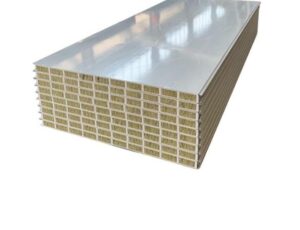
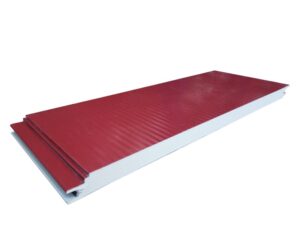
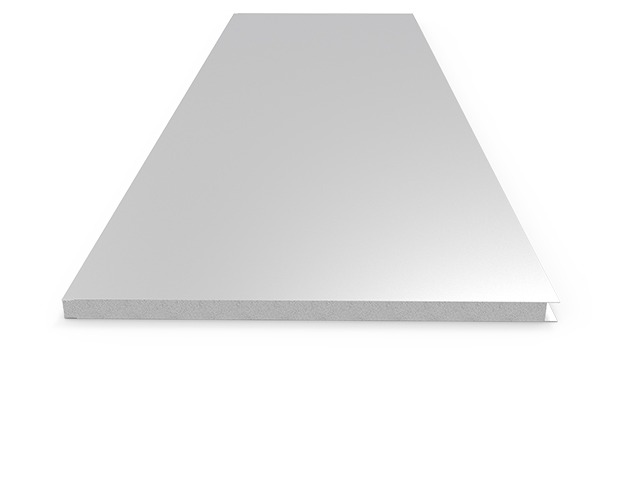
The 75mm EPS Sandwich Wall Panel is the economy workhorse for insulated wall construction: expanded polystyrene core delivering dependable thermal resistance at the lowest practical cost per square meter, bonded between steel facings in a ready-to-install panel. At 75mm thickness the panel suits insulated buildings, cool storage rooms, temperature-controlled workshops and partition walls where the temperature duty is moderate and construction budget sets the frame. Effective width 1000mm and lengths from 2m to 12m keep joint counts low and installation fast.
The panel serves the broad middle of insulated construction: agricultural produce stores, packing sheds, insulated equipment buildings, temperature-controlled workshops, cool rooms at positive temperatures, retail back-of-house linings and budget cold storage programs. It is a frequent choice for developing-market cold chain projects where capital efficiency determines viability, and for industrial buildings needing thermal separation without freezer-grade performance. Where projects later require deeper cold, EPS walls can be supplemented or the building re-lined – the panel format integrates with the full sandwich panel family.
Expanded polystyrene has insulated buildings for over half a century for one reason: it delivers thermal resistance at a price no other core material matches. The foam’s closed-cell bead structure conducts heat at roughly 0.036–0.040 W/mK – higher than polyurethane’s 0.022, but substantially lower than air gaps or fibrous alternatives. At 75mm, the panel achieves thermal resistance sufficient for most cool and temperature-controlled duty, at a panel cost that keeps large-area projects viable. The engineering discipline is matching core choice to duty: where space is unlimited and temperatures are moderate, paying for foam’s higher efficiency buys little; where space is constrained or freezers run deep, PU panels earn their premium. Our heat-load calculations make the comparison quantitative, so budget decisions rest on numbers rather than habit. For many agricultural, industrial and developing cold chain projects, 75mm EPS is simply the right economic answer.
EPS cores are cut to density specification and bonded to steel facings under controlled pressure; panels are inspected for facing adhesion, dimensional accuracy and edge quality before packing. Arteco prepares layouts with junction details, coordinates panels with doors and trims, and supplies complete building packages where panels, doors and hardware ship as one consignment.
Cool rooms at positive temperatures, temperature-controlled workshops and insulated buildings are the natural fit. For freezer duty at -18°C and below, we typically recommend thicker construction or PU/PIR panels.
With intact facings and dry service, EPS cores perform for decades without degradation of insulation value. Service life is governed by facing condition and joint maintenance, as with all sandwich panels.
EPS is a thermoplastic foam with flame-retardant grades available; it is not non-combustible. Where fire strategy restricts combustible cores, rock wool panels are the alternative – we specify according to your project requirements.
EPS absorbs negligible moisture and performs well when facings and joints keep liquid water out. Joint sealing details are specified per exposure in the layout.
Yes – lightweight panels and simple joint systems suit local installation teams. We provide layout drawings, junction details and remote guidance throughout the build.
Budget-driven construction rewards planning discipline more than premium construction does, because there is less margin to absorb mistakes. The essentials are familiar but decisive: confirm room purpose and temperature before ordering, so thickness and refrigeration match actual duty; verify site access for delivery and installation before panels ship; confirm electrical supply for refrigeration equipment early; and plan door position and traffic flow around real operating patterns. Economy projects also benefit from standardization – standard panel configurations ship faster and cost less than custom equivalents, so wherever the design permits, standard dimensions win. We guide economy projects through the same engineering process as premium ones, scaled appropriately: heat-load calculation, layout drawings and equipment matching, because the difference between an economy project that works and one that disappoints is rarely the panel price – it is the planning behind it.
By fixing scope early: room dimensions, temperature and door schedule before ordering. Changes after production begins cost more than planning them correctly; we help lock the scope with drawings before commitment.
| Specification | Value |
|---|---|
| Panel Thickness | 75mm |
| Core Material | EPS (Expanded Polystyrene) |
| Standard Length | 2m-12m |
| Effective Width | 1000mm |