
One-Stop Cold Storage Solutions: Design, Manufacture & Support
One-Stop Cold Storage Solutions: Design, Manufacture & Support
Category: Sandwich Panels
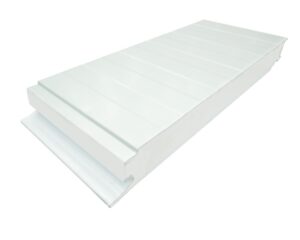
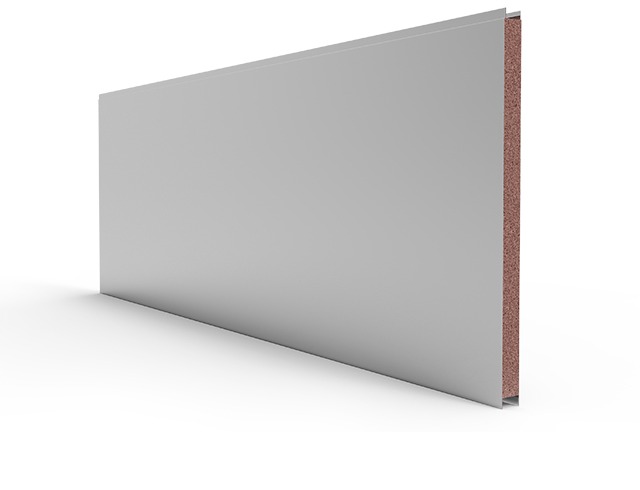
The TPS Clean Room Panel is built around Thermal Plastic Spacer technology: a core system engineered for dimensional stability and consistent surface behavior in controlled environments. TPS panels present smooth, stable wall surfaces that hold flatness through temperature and humidity variation – the geometric steadiness cleanrooms demand – while providing the thermal insulation and fire-resistant behavior controlled-environment specifications require.
The panel serves controlled environments where wall stability is part of process performance: electronics assembly and inspection rooms, precision manufacturing areas, laboratory controlled spaces, pharmaceutical support zones and packaging clean areas. It is specified where rooms cycle through humidity or temperature changes and walls must not move, bow or open joints in response – conditions that would compromise lesser constructions over time.
Cleanroom classifications are awarded to rooms, but they are maintained by surfaces. Particle counts stay low because walls, ceilings and joints do not shed, crack or open gaps as conditions change – and that depends on material stability more than on filtration. A wall that flexes with pressure swings works its joints loose; a panel that swells with humidity telegraphs movement into surface finishes; a core that creeps under its own weight bows planes out of flatness. Each movement creates the micro-geometry where particles accumulate and classifications erode. TPS core technology is engineered against exactly these failure modes: dimensional stability through humidity variation, resistance to creep, and consistent surface behavior that keeps facings bonded flat. The practical outcome is rooms whose geometry at year five matches commissioning day – joints still closed, planes still flat, surfaces still cleanable – which is what allows classification performance to persist without escalating maintenance. Where cleanroom owners investigate recurring particle problems, wall movement is frequently the overlooked cause; specifying stable-core construction removes the problem from the physics rather than fighting it in operation.
TPS cores are fabricated and bonded to facings under controlled conditions; panels are inspected for flatness, facing adhesion and dimensional accuracy before packing. Arteco prepares cleanroom layouts with joint details, coordinates panels with doors and service penetrations, and supports installation so controlled environments reach classification quickly and hold it.
Dimensional stability and consistent surface behavior – walls that stay flat and joints that stay tight through environmental cycling. Fire-resistant and insulating behavior complete the controlled-environment specification.
Yes – core stability through humidity variation is a defining property, making TPS panels well suited to rooms whose conditions change across shifts or seasons.
Yes – wall and ceiling systems use the same panel family with support details specified per orientation.
Panels and joints are detailed for the room’s pressure regime; positive and negative pressure rooms are both served with appropriate sealing details in the layout.
Standard cleanroom cleaning plus periodic joint inspection. Core stability means the maintenance burden does not grow with time, unlike constructions that move and degrade.
Controlled environments rarely keep their original duty forever: processes change, classifications evolve, and rooms must adapt. Wall stability becomes most valuable exactly then – because a room whose geometry holds through change adapts cheaply, while a room whose walls move resists it. Consider what stability delivers across a room’s life: when setpoints shift, stable panels keep joints sealed through the new thermal regime rather than opening gaps. When classifications tighten, flat stable surfaces clean to the new standard without remediation. When layouts reconfigure, mechanically joined panels relocate and reseal without the degradation that movement inflicts on lesser constructions. Each adaptation costs days rather than weeks, and preserves the envelope’s integrity rather than consuming it. Specifying stable-core construction is therefore an investment in the room’s future flexibility – the capacity to change without rebuilding. Owners discover this value precisely when change arrives, which is why experienced cleanroom operators specify stability from the first room onward.
Yes. Panels join mechanically, so partitions can be relocated or rooms resized with replacement seals. Core stability means panels re-install flat, keeping the reconfigured room to cleanroom standard.
| Specification | Value |
|---|---|
| Core Material | TPS (Thermal Plastic Spacer) |
| Application | Cleanroom, controlled environment |