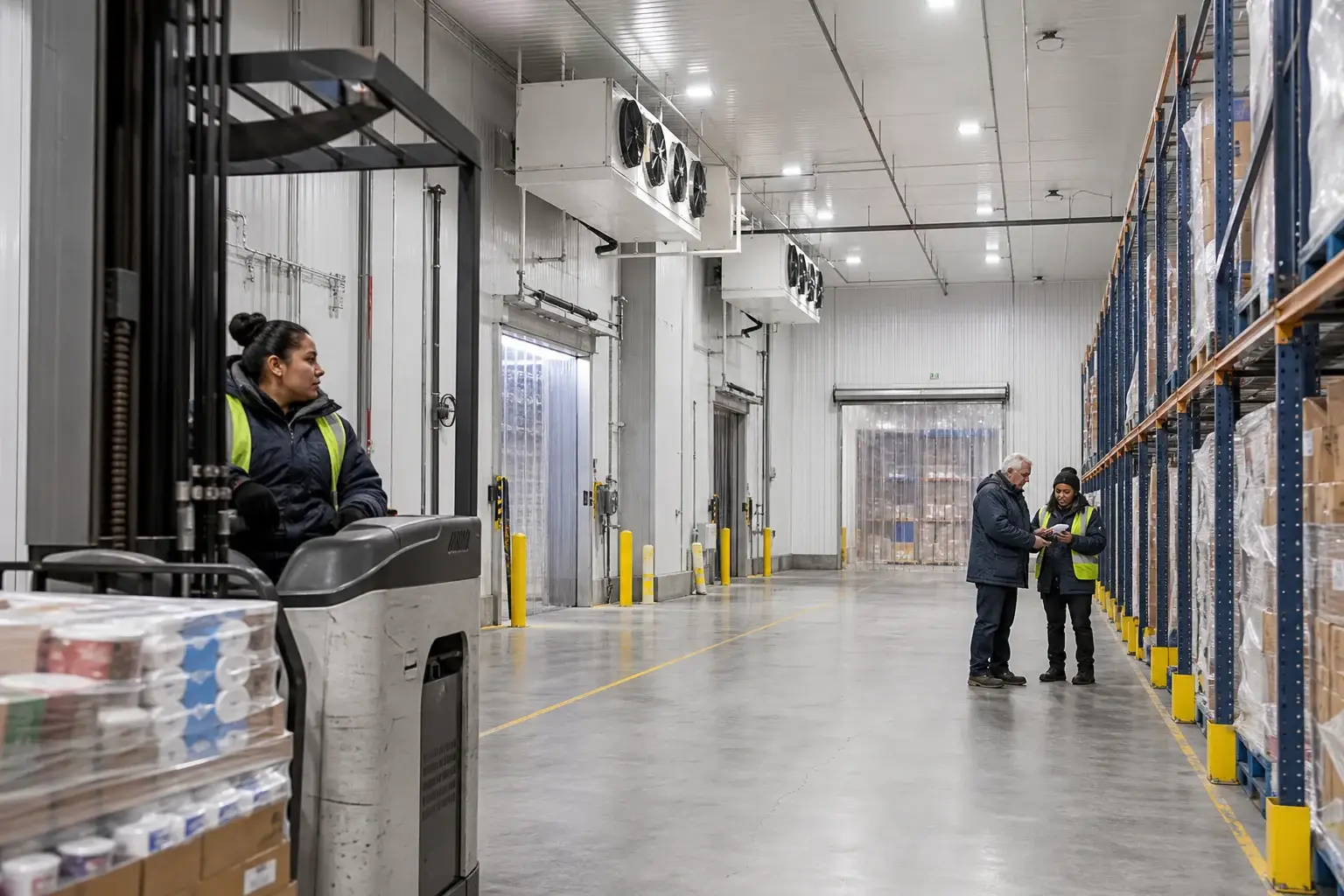
1. Core Construction Materials for Walk-in Freezer
Thick Polyurethane Insulated Panels
Panels with thickness of 100 mm, 120 mm or 150 mm are standard options. High-density PU foam delivers excellent thermal insulation to minimise heat infiltration and avoid excessive energy consumption under low-temperature operating conditions.
Insulated Freezer Door with Frame Heater
Heavy-duty insulated swing door or sliding door fitted with high-performance rubber gaskets. The door frame heater cable is a mandatory component for freezers, preventing frost accumulation and stopping the door from freezing shut. An internal emergency release handle is required for safety.
Low-temperature Refrigeration System
Consists of low-temperature scroll or screw condensing units, freezing evaporators, thermostatic expansion valves, copper pipelines and filter driers. The evaporator must be equipped with an electric defrost system to remove heavy frost efficiently.
Insulated Cold Room Floor
Unlike walk-in coolers, walk-in freezers need complete insulated flooring to prevent ground frost heave, moisture penetration and slab deformation under sustained sub-zero temperatures. Anti-slip surface treatment is recommended.
Electrical Control System
Intelligent temperature controller, distribution box, low-temperature anti-explosion LED lights, defrost timer and multiple safety protection modules. It supports automatic temperature regulation, scheduled electric defrost and fault alarm functions.
Auxiliary Materials
Sealant, aluminium alloy trims, fixing brackets, vibration isolation pads and drainage accessories. All gaps between panels must be fully sealed to prevent cold air leakage and condensation.
2. Important Installation Precautions
Select a solid, flat and dry installation location. The foundation must bear the load of the cold room and avoid uneven settlement.
Assemble insulated panels tightly. Fill all seams with sealant to block air and moisture penetration. Any air leakage will lead to frost forming inside panel gaps.
Install the condensing unit in a well-ventilated area. Avoid enclosed spaces; poor heat dissipation will trigger high-pressure alarms and reduce cooling capacity.
Complete pipeline welding, vacuuming and refrigerant charging strictly following refrigeration industry standards to prevent refrigerant leakage.
Arrange the evaporator properly inside the freezer to ensure even airflow circulation and eliminate blind spots with uneven temperatures.
Build effective drainage channels. Defrost water must drain smoothly without backflow or icing inside the cold room.
Separate power wiring from refrigerant pipelines. Conduct insulation tests before commissioning to guarantee electrical safety.
3. Daily Operation & Maintenance Notes
Set the operating temperature according to stored products. Avoid frequent large adjustments to the target temperature, which overloads the compressor.
Reduce door opening frequency and shorten opening duration. Massive cold air loss increases power consumption and accelerates frost build-up on the evaporator.
Keep proper spacing between goods, walls, floors and evaporators. Do not stack goods to block air circulation.
Follow the planned defrost schedule. Do not disable the automatic electric defrost system; thick frost will block heat exchange and drastically lower cooling efficiency.
Clean condenser coils and evaporator fins regularly to remove dust and dirt. Dirty heat exchangers cause high energy usage.
Inspect door gaskets and frame heaters periodically. Replace aged sealing strips immediately once cold leakage is found.
Monitor unit running sound, pressure and temperature regularly. Cut off power and check for faults once abnormal vibration or noise occurs.
For long-term shutdown: fully clean the interior, drain all residual water, keep the door slightly ajar, and disconnect the main power supply to prevent dampness and component ageing.
Conclusion
A reliable walk-in freezer relies on thick insulated panels, dedicated low-temperature refrigeration equipment and anti-freezing accessories. Standardised installation and scientific daily maintenance ensure stable low-temperature performance, lower operational costs and extend the service life of the whole system. It serves as an ideal long-term frozen storage solution for commercial and industrial refrigeration projects.