
One-Stop Cold Storage Solutions: Design, Manufacture & Support
One-Stop Cold Storage Solutions: Design, Manufacture & Support
Category: Sandwich Panels
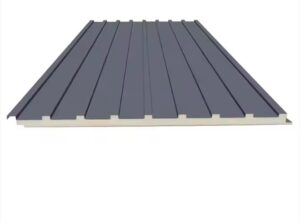
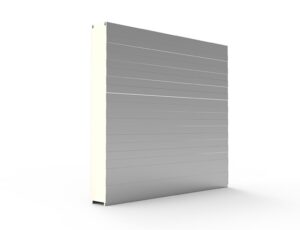
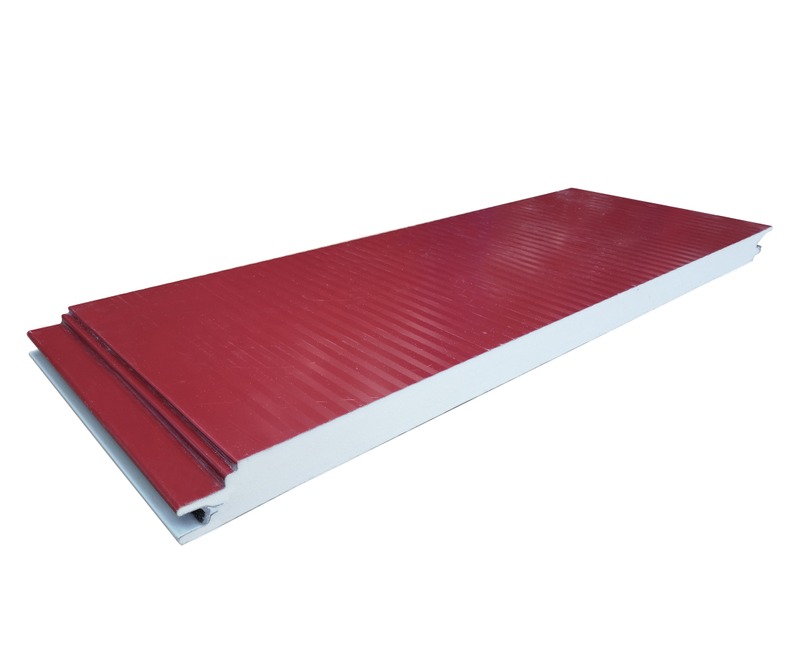
Sandwich Panels with PIR insulation core are built to perform for decades, not just through commissioning. The polyisocyanurate foam resists the three forces that quietly degrade building envelopes over time: moisture absorption, dimensional movement under thermal cycling, and long-term compression under load. With conductivity held at 0.022 W/mK, core density at 40 kg/m³ and thickness options from 40mm to 200mm, the panel keeps its insulation value and joint tightness through years of freezer cycling – the difference between an envelope that still performs at design level in year fifteen and one that has quietly become an energy liability.
Long-life specifications dominate infrastructure-grade cold chain assets: public refrigerated warehouses financed on thirty-year models, port and airport cargo terminals, strategic food reserve stores, pharmaceutical distribution centers and industrial cold storage built as landlord improvements for multiple tenants over time. These projects cannot afford envelope replacement or major repair programs, so material longevity drives selection. The panels also suit facilities in aggressive environments – coastal sites with salt air, tropical locations with intense vapor drive, and northern climates with extreme winter temperature differentials – where envelope durability determines lifetime cost.
Envelope failure rarely announces itself; it accumulates as slightly higher electricity bills, occasional frost at joints, and panels that slowly bow between fixings. The root causes are moisture entering the core, foam shrinking away from facings under thermal cycling, and compression around fixings under sustained load. PIR chemistry addresses all three: its cell structure stays closed and dry, its cross-linked polymer resists the shrinkage that afflicts lower-grade foams at freezer temperatures, and its compressive strength distributes fixing loads without crushing. The practical outcome is that joint sealants – the only true consumable in a panel envelope – remain the focus of inspection, while the panels themselves simply continue performing. For owners, this converts envelope maintenance from a capital uncertainty into a predictable, low-cost inspection routine.
Continuous lamination with controlled foam metering and cure produces consistent core properties batch after batch. Panels are inspected for density, adhesion and dimensional accuracy, and production records remain traceable by order. Arteco supports durability through design: vapor-tight joint details, appropriate fixing schedules and facade drainage guidance are documented for each project, and the same panel platform remains available for future extensions so repairs and additions match the original construction.
With intact facings and maintained joint sealants, PIR panel envelopes routinely serve twenty-five years or more in cold storage duty. The foam itself does not degrade when kept dry; service life is governed by facing condition and sealant maintenance.
The closed-cell PIR core absorbs negligible moisture, and steel facings protect it from liquid water. The design focus is keeping joints vapor-tight so humid air cannot condense inside connections – which our joint details address.
Yes. Core density and facing bond are specified to resist bowing under differential temperature, and fixing schedules limit unsupported span. We detail support spacing per panel thickness and orientation.
Minor facing damage can be treated with approved repair systems; significant impact damage is addressed by replacing individual panels, which is straightforward because each panel is mechanically jointed rather than bonded to neighbors.
Panel profiles and core specifications remain in continuous production, and we retain project records so replacement panels match the original thickness, facing and color for the life of the facility.
An envelope’s durability is determined at three moments: material selection, installation detailing, and the maintenance program that follows. Selection sets the baseline – stable foam chemistry and corrosion-appropriate facings define how the materials age. Installation detailing determines whether joints stay sealed: vapor-tight details, correct fixing schedules and proper sealant specification prevent the slow moisture ingress that degrades insulation from within. Maintenance completes the picture – scheduled joint inspections and sealant renewal catch wear before it becomes damage. Owners who treat these three moments as one continuous responsibility keep envelopes performing at design level for decades; those who address only the first typically discover problems through energy bills and frost patterns years later. We support all three: material documentation for selection, drawn details for installation, and inspection guidance for the maintenance program.
Joint sealant condition, facing integrity at high-traffic areas, door interface seals and penetration details. We provide an inspection checklist with every project so maintenance follows a defined routine.
| Specification | Value |
|---|---|
| Panel Thickness | 40mm, 50mm, 75mm, 100mm, 150mm, 200mm |
| Standard Facings | Steel sheet / Galvanized sheet / Stainless steel |
| Core Material Density | 40 kg/m³ |
| Thermal Conductivity | 0.022 W/mK |
| Acoustic Insulation | 30 dB |
| Standard Length | 2m-12m |
| Effective Width | 1000mm |
| Fire Resistance | Non-flammable |