
One-Stop Cold Storage Solutions: Design, Manufacture & Support
One-Stop Cold Storage Solutions: Design, Manufacture & Support
Category: Sandwich Panels
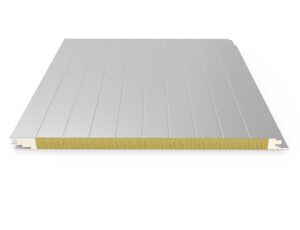
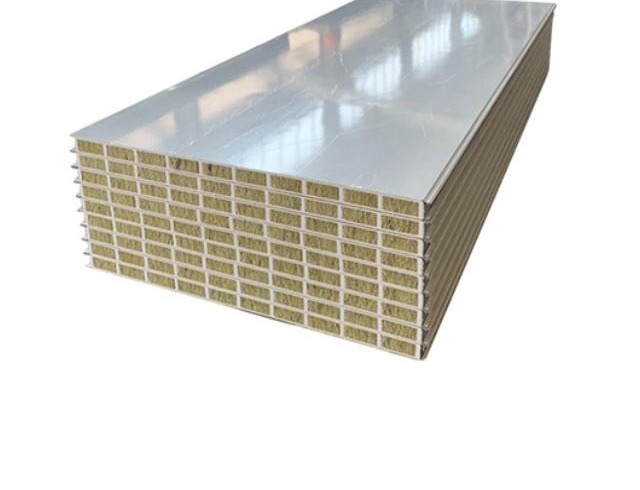
The Magnesium Oxide Rock Wool Cleanroom Panel is the fire-performance flagship of our cleanroom range: magnesium oxide board facings – themselves non-combustible – bonded to an A-grade rock wool core, creating a cleanroom envelope where every layer resists fire. The panel serves pharmaceutical facilities, electronics plants and laboratories where cleanroom standards and fire strategy must be satisfied simultaneously, delivering flush, cleanable surfaces alongside genuinely non-combustible construction.
The panel is specified wherever cleanroom classification meets fire governance: pharmaceutical manufacturing suites under GMP inspection, vaccine and biotech production areas, hospital compounding and sterile preparation rooms, electronics fabrication where solvent or electrical hazards raise fire concerns, and laboratory buildings housing multiple risk classes. It also serves fire separation walls within clean facilities – barriers between production zones, escape corridor linings and plant room enclosures – where the wall must perform as both cleanroom surface and fire barrier.
Cleanrooms impose contradictory demands on their envelopes. Contamination control wants smooth, sealed, cleanable surfaces with no particle-shedding materials; fire regulation wants non-combustible construction that compartmentalizes risk. Many cleanroom materials satisfy one requirement and compromise the other – foam-core panels insulate and clean well but burn; bare mineral boards resist fire but shed particles and resist cleaning. This panel resolves the contradiction by material selection: magnesium oxide facing gives the cleanroom its surface – hard, smooth, wipeable, dimensionally stable – while the rock wool core gives the fire strategy its substance – A-grade non-combustible mass that maintains barrier integrity under fire exposure. The result is an envelope that auditors and fire authorities can both approve without exceptions, which matters commercially: facilities facing GMP inspections and insurance underwriting cannot afford envelope materials that generate findings. Specifying dual-compliant construction at the design stage is consistently cheaper than remediating it after approval processes stall.
MgO facings are conditioned, cut and bonded to rock wool cores under controlled pressure; panels are inspected for surface flatness, facing bond and dimensional accuracy before packing. Arteco prepares cleanroom layouts with joint detailing for flush installation, coordinates panels with doors, windows and HVAC penetrations, and provides the fire documentation regulatory submissions require.
The envelope contributes no combustible material, supporting fire compartmentation requirements without exceptions. Documentation for the panel construction ships with the order for approval submissions.
Magnesium oxide board resists standard cleanroom disinfectants; surface finish is specified per your sanitation protocol. We confirm chemical compatibility during project review.
Panels and joint details are engineered for cleanroom pressure regimes; positive and negative pressure rooms are both served with appropriate sealing details in the layout.
Yes – wall and ceiling installations use the same panel family with support details specified per orientation and span.
MgO board is moisture-stable when properly finished and jointed; we detail joints and penetrations for the room’s humidity regime during design.
Pharmaceutical and electronics facilities must demonstrate that their cleanroom construction supports classification – and demonstration requires documentation built into the project from the start. The evidence chain begins with material specifications: facing surface properties, core fire classification and joint detailing, all documented before installation. Installation records follow: panel batch references, joint sealing verification and penetration details as executed. Commissioning then proves the result – pressure differential verification, particle count testing at defined positions, and recovery testing after disturbance. Each stage references the previous one, so an auditor can trace the finished room’s performance back through construction records to material certificates. Envelopes documented this way pass validation reviews smoothly; envelopes built without documentation force retrospective evidence gathering that delays approvals. We supply the material documentation and construction detail records that validation requires as standard with every regulated cleanroom project, so compliance evidence accumulates as the room is built rather than being reconstructed afterward.
Material specifications, fire classification data, panel batch references and joint detail drawings ship with every order, forming the construction record that validation and audit processes require.
| Specification | Value |
|---|---|
| Surface Material | Magnesium oxide board |
| Core Material | Rock wool |
| Application | Cleanroom, pharmaceutical, electronics |
| Fire Resistance | A-grade |