
One-Stop Cold Storage Solutions: Design, Manufacture & Support
One-Stop Cold Storage Solutions: Design, Manufacture & Support
Category: Sandwich Panels
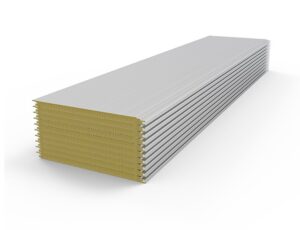
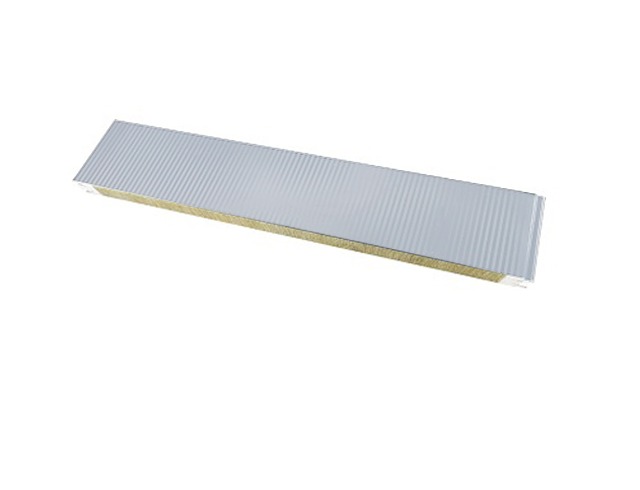
The 75mm Rock Mineral Wool Cold Room Panel answers a question foam panels cannot: how do you insulate a cold room that must also be fireproof? Its rock mineral wool core is classified A-grade non-combustible – it does not burn, does not fuel flame spread and withstands temperatures beyond 1000°C – while still providing the thermal insulation and acoustic damping that refrigerated rooms require. For cold spaces inside fire-regulated buildings, rooms adjacent to hot process areas, and facilities where insurance or authority requirements restrict combustible cores, this panel delivers cold storage performance with a genuinely non-combustible envelope.
The panel serves cold spaces where fire safety governs the specification: chill rooms inside multi-story food buildings, temperature-controlled storage adjacent to cooking, baking or frying lines, cold rooms sharing walls with boiler or electrical plant rooms, pharmaceutical suites in regulated structures, and retrofit cold spaces inside existing buildings whose fire strategy excludes combustible insulation. It also appears in projects where insurers apply strict cold storage fire clauses – a growing reality as cold chain facility values rise. Where a room needs both non-combustible walls and high insulation thickness, the panel can be combined with additional insulation layers detailed in the project layout.
Most cold room projects optimize for insulation value, because heat gain drives operating cost. But a subset of projects faces a different constraint first: the building’s fire strategy. When a cold room sits inside a regulated structure – a multi-tenant building, a facility with assembly or processing hazards, an insured high-value warehouse – authorities and insurers scrutinize envelope combustibility, and foam cores, whatever their retardant additives, remain combustible materials. Rock mineral wool changes the conversation: as an A-grade non-combustible core, it contributes no fuel, produces no flaming droplets and maintains barrier integrity under fire exposure. The engineering trade-off is insulation efficiency – mineral wool conducts more heat than foam, so thickness and room temperature must be matched carefully. That is exactly the balance this panel strikes: 75mm of non-combustible insulation for cold duties where fire compliance is the design driver, engineered room by room so temperature performance follows.
Rock wool cores are cut and bonded to steel facings on controlled lines, with facing adhesion and panel dimensions verified before packing. Arteco specifies the panel where fire strategy requires it, prepares layouts with junction details compatible with fire separation requirements, and coordinates panels with doors and refrigeration equipment so the cold room performs thermally while satisfying its fire documentation.
The core does not contribute to fire: it will not ignite, spread flame or produce flaming droplets when exposed to fire, and it maintains its barrier function. This classification satisfies requirements that exclude combustible insulation outright.
For chill and mild sub-zero duty, yes. Deep freezer temperatures are better served by thicker mineral wool assemblies or combined constructions; we calculate the requirement per room temperature.
Mineral wool conducts more heat per millimeter than PU foam, so equivalent insulation requires greater thickness. Where fire compliance governs, the trade is accepted; we quantify it in the heat-load calculation.
Yes – steel facings present cleanable surfaces, and the core is unaffected by moisture when joints are detailed properly. Stainless facings are available for aggressive washdown programs.
Yes. Many projects use rock wool panels for fire-regulated rooms and foam panels elsewhere; joint details between the two systems are drawn in the layout.
Cold rooms inside fire-regulated buildings succeed when fire and thermal requirements are designed together from the start. The fire strategy determines where non-combustible construction is mandatory – typically walls shared with regulated spaces, escape route boundaries and plant room separations. Thermal engineering then sizes the mineral wool construction for the room temperature, accounting for its higher conductivity compared with foam. The two disciplines meet at junctions: fire-stopping details at penetrations, sealed interfaces at door frames, and continuity with the host building’s fire compartments. Planning these together avoids the expensive pattern of designing the cold room first and retrofitting fire compliance afterward. Our engineers work both disciplines in one design process, producing rooms that satisfy fire authorities and hold temperature efficiently – the combination that regulated facilities need and rarely find from single-discipline suppliers.
Yes. We work directly with fire consultants and authorities, providing panel construction details, classification data and junction specifications for the fire strategy documentation.
| Specification | Value |
|---|---|
| Panel Thickness | 75mm |
| Core Material | Rock Mineral Wool |
| Properties | Fireproof, thermal insulation, sound absorption |
| Standard Length | 2m-12m |
| Effective Width | 1000mm |