
One-Stop Cold Storage Solutions: Design, Manufacture & Support
One-Stop Cold Storage Solutions: Design, Manufacture & Support
Category: Sandwich Panels
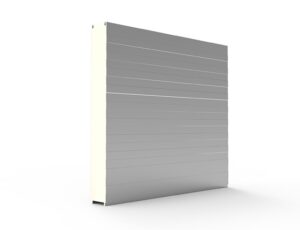
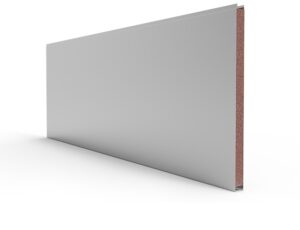
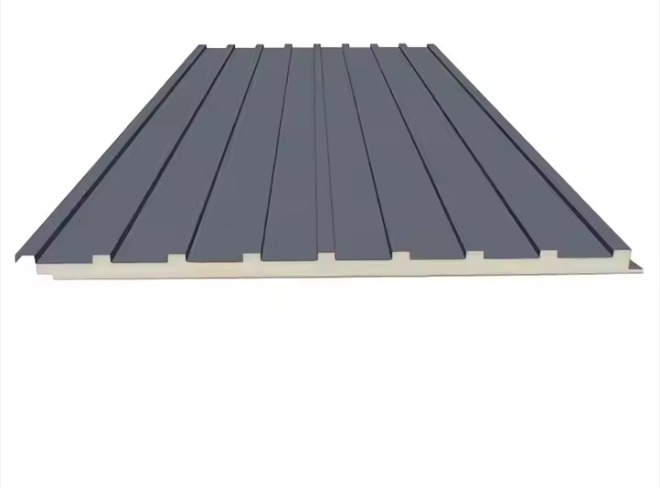
The High-Performance PIR Insulated Aluminum Great Wall Panel is engineered for projects where the envelope must exceed standard duty: demanding climates, stringent energy targets and facades expected to hold appearance for decades with minimal attention. The polyisocyanurate core delivers top-tier insulation at 0.022 W/mK class conductivity, aluminum alloy facings provide corrosion resistance that outlasts coated steel in aggressive atmospheres, and the Great Wall profile supplies both architectural depth and panel stiffness. The result is a premium insulated cladding system specified when lifecycle cost, not first cost, drives the decision.
The panel serves facilities built to outlast ordinary construction: cold chain hubs in port and coastal zones, pharmaceutical and high-value food storage with demanding audit and insurance standards, corporate logistics buildings where facade appearance carries brand weight, and projects in extreme climates – intense UV, salt spray, chemical air – where envelope degradation is accelerated. It is also the specification of choice for owners who calculate cost across twenty-five years rather than across the construction loan, because aluminum’s maintenance profile and PIR’s stable insulation shift expense away from the operating years.
Performance claims deserve definitions. Thermally, the PIR core’s conductivity keeps wall U-values low, which translates into reduced heating and cooling loads – quantifiable in every project’s energy calculation before order. Dimensionally, the core resists the shrinkage and creep that degrade lesser foams, so insulation value and joint tightness persist through decades of thermal cycling rather than fading with them. Environmentally, aluminum’s self-passivating oxide surface resists salt and chemical attack without depending on organic coatings that chalk, fade and eventually fail. Structurally, the Great Wall geometry raises panel stiffness, keeping facade planes flat under wind load and thermal movement. Together these properties define the difference between a facade that still looks and performs as designed in year twenty, and one that has been repainted twice and still shows joint problems. For facilities whose value depends on appearance and reliability simultaneously – cold chain assets are financed and insured on exactly those qualities – the high-performance specification is not luxury; it is risk management expressed as building material.
Panels are laminated under controlled conditions with facing treatment verified for adhesion, then profiled, cut and inspected against dimensional tolerances before packing. Arteco prepares facade layouts, joint and corner details, and fixing specifications engineered for the project’s wind and climate exposure, and provides the documentation packages premium projects require – thermal data, fire information and product traceability.
Lifecycle economics: aluminum facings avoid repaint cycles, and the PIR core holds insulation performance long-term. Over decades, maintenance and energy savings typically recover the premium – we can model this for your project.
Yes – aluminum’s oxide layer resists salt attack, and facing treatment is specified for marine exposure. Joint and trim materials are coordinated for the same environment.
PIR’s dimensional stability and the profile’s stiffness keep panels flat and joints tight through thermal cycling, which protects both appearance and insulation performance.
Yes – for chill and temperature-controlled duty at 50mm; deeper cold applications use thicker constructions. We calculate the build-up from room temperature and climate.
Fire classification data, thermal performance documentation and product traceability records ship with the order, prepared in formats suitable for approval submissions and insurance review.
Premium envelope specifications justify themselves across the building’s operating life, and the calculation is worth doing before purchase. First-cost comparison is only the opening position: aluminum facings eliminate repaint cycles that painted steel requires every eight to twelve years in aggressive environments – each cycle carries scaffold, labor and material cost plus operational disruption. Stable insulation performance means energy consumption calculated at commissioning remains valid decades later, where degraded envelopes silently inflate bills. Dimensional stability keeps joints sealed, avoiding the frost and infiltration problems that generate repair work in lesser constructions. Add these operating savings across a twenty-five-year horizon and premium specifications routinely recover their first-cost difference – often within the first decade. We can model this comparison for your project with documented assumptions, converting the specification decision from preference into arithmetic.
Yes. Share the building parameters and your maintenance assumptions; we produce a documented lifecycle model comparing standard and premium specifications over your chosen horizon.
| Specification | Value |
|---|---|
| Panel Thickness | 50mm |
| Surface Material | Aluminum alloy |
| Core Material | PIR (Polyisocyanurate) |
| Joint System | Great Wall profile |