
One-Stop Cold Storage Solutions: Design, Manufacture & Support
One-Stop Cold Storage Solutions: Design, Manufacture & Support
Category: Sandwich Panels
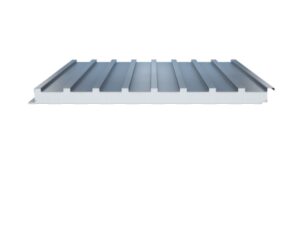
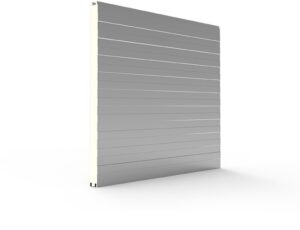
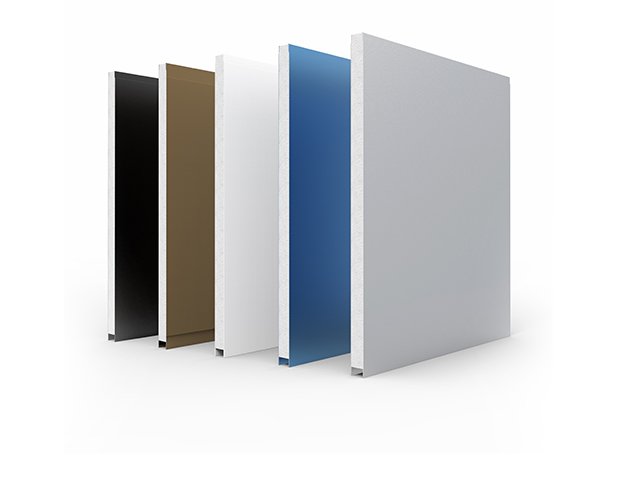
The Z-Lock EPS Sandwich Panel combines expanded polystyrene’s proven insulation economics with a joint system engineered for tightness: interlocking Z-profile edges that hook adjacent panels together along their full length. The mechanical interlock aligns faces, resists joint separation under thermal movement and wind load, and keeps the envelope continuous without relying on sealant alone. Thickness options from 50mm to 150mm, effective width 1000mm and lengths from 2m to 12m make the panel a practical choice for insulated buildings, cool storage rooms and temperature-controlled enclosures where construction economy matters.
The panel serves projects where insulation value per dollar drives the specification: insulated warehouses and sheds, cool storage rooms at positive temperatures, packing and sorting facilities, temperature-controlled workshops, agricultural storage buildings and budget-conscious cold room programs. It is also widely used for insulated partitions and linings inside existing structures, where lightweight construction and straightforward installation keep projects fast. For freezer duty, thicker EPS constructions can be engineered, though foam-core panels with lower conductivity are typically favored at deep temperatures.
A sandwich panel envelope is only as good as its joints: faces can insulate perfectly while poorly joined edges leak air, admit moisture and telegraph movement cracks into finishes. Butt joints sealed only with mastic depend entirely on adhesion that ages, shrinks and works loose under thermal cycling. The Z-lock profile changes the mechanics – panels hook together so the joint resists opening in both directions, faces align automatically during erection, and load transfer across the joint keeps wall sections behaving as one plane. Sealant still plays a role at joints, but as backup rather than primary restraint, which is why Z-lock envelopes age better with less maintenance. For owners, the practical difference appears years later: joints still tight, no visible seam cracking, and insulation performance intact. It is one of those details that costs little at installation and pays continuously through the building’s life.
EPS cores are cut and bonded to facings with the Z profile formed accurately at each edge; panels are inspected for joint fit, facing adhesion and dimensional accuracy before packing. Arteco prepares layouts with junction details, coordinates panels with doors and trims, and supports installation so the envelope closes tight from the first panel to the last.
EPS conducts more heat per millimeter than PU foam, so equivalent insulation requires greater thickness. EPS wins on cost per panel, which is why it suits economy projects; PU wins on insulation efficiency where space or energy cost dominates.
Thicker EPS constructions can serve mild frozen duty, but for continuous -18°C and below service we typically recommend PU/PIR panels for their lower conductivity. We can calculate both options for your project.
Joints are typically sealed as backup to the mechanical interlock, improving air and moisture tightness. The interlock carries the structural alignment, so the envelope does not depend on sealant adhesion alone.
Yes, with standard tools. We pre-plan openings in the layout drawings so factory-cut edges dominate, and field cuts receive sealing guidance.
Color-coated steel facings are standard for storage and industrial environments; facing gauge and finish are confirmed per project requirements.
Z-lock construction delivers its best performance when installation details respect the joint system. Panels should be erected in sequences that let each joint hook fully before adjacent loads are applied – forcing misaligned panels damages the profile and compromises the interlock. Sealant application follows the manufacturer pattern: continuous beads at specified positions, tooled to contact both joint faces. Openings are planned so factory-formed edges dominate; field cuts receive the same sealing attention as factory joints. Trim and flashing details complete the envelope at corners, rooflines and door surrounds. Finally, the completed envelope benefits from periodic joint inspection – the interlock carries structural alignment, but sealant condition determines long-term air and moisture tightness. Installers who follow these details consistently produce envelopes that stay tight for decades; our installation guidance documents each point for every Z-lock project.
Yes. Layout drawings include joint sequencing and sealing details, and our team answers installation queries throughout the build so local crews work to the same standard we specify.
| Specification | Value |
|---|---|
| Panel Thickness | 50mm, 75mm, 100mm, 150mm |
| Core Material | EPS (Expanded Polystyrene) |
| Lock System | Z-Lock |
| Standard Length | 2m-12m |
| Effective Width | 1000mm |