
One-Stop Cold Storage Solutions: Design, Manufacture & Support
One-Stop Cold Storage Solutions: Design, Manufacture & Support
Category: Sandwich Panels
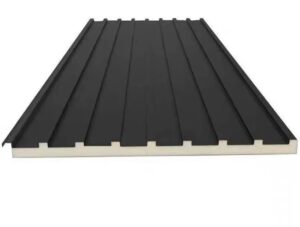
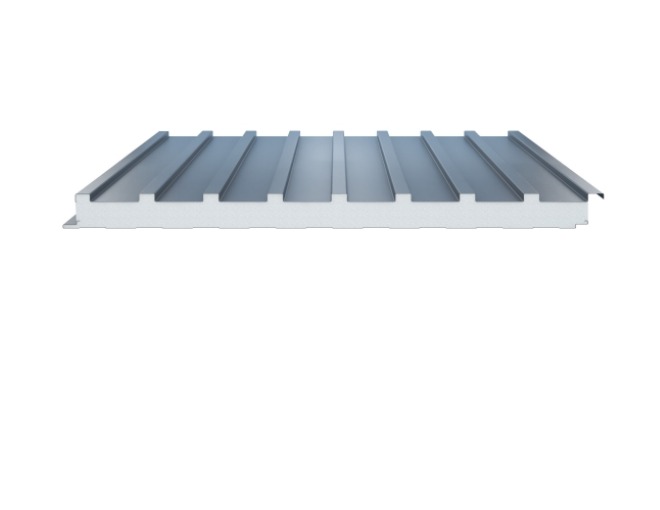
The Aluminum Alloy PIR Insulated Great Wall Panel is engineered from the facing material outward: aluminum alloy skins chosen for the specific properties alloying brings – higher strength than pure aluminum, stable formability for the deep Great Wall profile, and long-term corrosion resistance that keeps facades sound in coastal, industrial and high-humidity service. Around the alloy skins, a polyisocyanurate core insulates at 0.022 W/mK class performance, producing a 50mm panel that serves walls and facades where the metal itself must carry structural duty and environmental exposure simultaneously.
The panel serves environments where facing material is the governing choice: coastal cold storage and seafood facilities exposed to salt spray, port-side logistics buildings, plants in chemical or humid industrial zones, commercial facades requiring metallic appearance with longevity, and retrofits where new cladding must bond to existing structures without adding heavy loads. It is equally at home in clean inland projects where owners simply prefer aluminum’s appearance and maintenance profile for the life of the building.
Aluminum’s corrosion resistance comes from its oxide layer, which pure aluminum forms naturally – so why alloy the facings at all? Because a facade panel must do more than resist corrosion: it must hold a deep-formed profile without thinning or cracking during manufacture, resist denting during transport and installation, and stand flat against wind loads for decades. Pure aluminum is soft; it forms easily but deforms easily too. Alloying elements raise yield strength and stiffness while preserving the oxide layer’s protection, so the material can be profiled aggressively – the Great Wall geometry depends on this – and still perform structurally in the finished wall. The same strength protects appearance in service: stiffer faces dent less, oil-can less in sunlight and keep shadow lines crisp. For buyers, the distinction is invisible in a sample and decisive in a ten-year-old facade – alloy facings are why the panel still reads flat and clean when lesser metals would show waves, dents and joint distortion. It is a specification detail that earns its place every day of the building’s life.
Alloy facings are profiled, surface-treated and bonded to the PIR core under controlled lamination; panels are inspected for profile integrity, facing bond and dimensional accuracy before packing. Arteco prepares facade layouts with joint and trim details, specifies fixings for the support structure, and provides material documentation for projects that require facing alloy certification.
Facing alloy is selected for forming performance and corrosion resistance in architectural service; grade certification can be provided for projects requiring material documentation.
Yes – alloy facings with appropriate surface treatment perform well in salt-air environments. We confirm treatment specification against your site’s exposure class during order review.
Panels handle like standard sandwich panels but resist denting and edge damage better during lifting and fixing, reducing installation-time defects on large projects.
Yes – for chill and temperature-controlled duty at 50mm; deeper cold applications use thicker constructions selected by heat-load calculation.
Periodic cleaning with water and mild detergent; no repainting cycle. The oxide layer self-maintains corrosion protection, which is the material’s core lifecycle advantage.
Aluminum alloy facings perform best when their specification matches the exposure they will serve. Inland urban environments need standard architectural treatment; industrial atmospheres with chemical loading benefit from enhanced surface protection; coastal sites require the most durable finish systems available. The alloy itself is selected for the forming duty – deep Great Wall profiles demand formability as well as strength – and surface treatment follows the exposure class. Fixing and trim materials are matched to the facing’s corrosion class so the entire facade system weathers uniformly; mixing material classes invites galvanic corrosion at the interfaces. Warranty and maintenance expectations follow from the specification: properly matched facings need only cleaning, while under-specified ones generate maintenance costs that erase their first-cost saving. We confirm facing specification against your site’s exposure during order review, documenting the selection so the facade’s material basis is recorded with the project.
Yes. Alloy grade certification and surface treatment documentation ship with the order for projects requiring material traceability in their facility records.
| Specification | Value |
|---|---|
| Panel Thickness | 50mm |
| Surface Material | Aluminum alloy |
| Core Material | PIR (Polyisocyanurate) |