
One-Stop Cold Storage Solutions: Design, Manufacture & Support
One-Stop Cold Storage Solutions: Design, Manufacture & Support
Category: Sandwich Panels
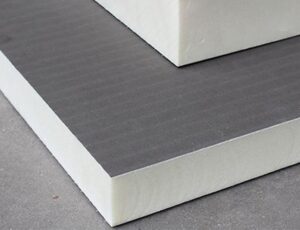
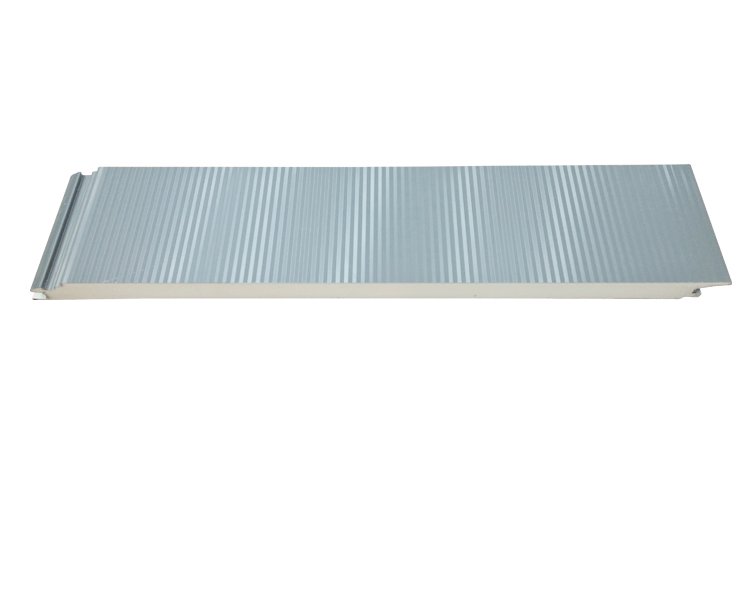
The Sandwich Wall Panel with PIR core pairs the lowest-conductivity rigid foam available – polyisocyanurate at 0.022 W/mK – with the fire performance that regulated facilities demand. PIR chemistry forms a protective char layer when exposed to flame, slowing heat release and preventing melt-drip, which is why it is the preferred core for freezer rooms, insured warehouses and buildings where fire strategy governs material selection. Produced with steel, galvanized or stainless facings in thicknesses from 40mm to 200mm, the panel insulates, partitions and protects with a single engineered component.
PIR core panels are specified wherever fire performance and insulation must be proven together. Frequent applications include freezer rooms in food distribution centers, pharmaceutical warehouses with strict property protection standards, cold rooms inside multi-tenant industrial buildings, airport and port cargo chill facilities, and processing plants where hot work and refrigerated rooms share one structure. They are also chosen for projects in jurisdictions with tightening fire codes for insulated buildings, because the PIR core keeps compliance achievable without sacrificing thermal performance or adding separate fire linings.
Fire risk in cold storage concentrates at electrical components, charging stations and maintenance activity rather than the envelope itself – but when an incident occurs, the envelope determines how far it spreads. Standard PU foam burns with heat release and melt-drip that can carry flame downward. PIR’s isocyanurate structure instead converts its surface into an insulating char when heated. That char shields the unburned core, slows heat release and maintains panel integrity longer, buying evacuation and response time. Combined with non-combustible steel facings, a PIR wall limits fire contribution from the envelope itself. For facility owners, this behavior influences insurance premiums as directly as it influences approvals, which is why PIR core panels increasingly anchor specifications for insured, financed cold chain assets.
Panels are laminated on a continuous double-belt line with controlled foam metering, then cured, cut and inspected for density, adhesion and dimensional accuracy. Fire classification samples are drawn from production for verification against the declared rating. Arteco provides layout drawings, joint and corner details, and coordinates panels with doors and refrigeration equipment so the delivered envelope performs as one system. Engineering support covers thickness selection, fire documentation requests and installation sequencing.
For freezer rooms and insured facilities, yes: the fire behavior supports approvals and can reduce insurance cost, while identical insulation value keeps energy performance equal. For low-risk chill rooms, standard PU may be sufficient – our engineers can compare both options for your project.
It means the core does not sustain combustion when the ignition source is removed and forms a protective char rather than melting. Final fire classification documentation is provided according to the standard specified in your project.
Yes. The same panel serves walls, partitions and suspended ceilings; support spacing and joint orientation are detailed in the layout drawings for each application.
PIR maintains dimensional stability at deep freezer temperatures where lesser foams can shrink or delaminate, keeping joints tight and the vapor barrier intact through years of thermal cycling.
Stainless steel facings are available for washdown-intensive rooms such as meat and seafood processing. Color-coated and galvanized facings cover standard storage environments.
Projects that require non-combustible envelopes share common documentation needs, and preparing them early keeps approvals on schedule. Confirm the fire classification your authority requires – terminology varies between jurisdictions, and the classification must match the tested assembly. Verify that panel joints and junction details maintain barrier continuity, because fire performance is tested as a system, not as isolated boards. Collect material documentation before submission: core classification, facing specifications and assembly details. Insurance reviewers apply the same standards, so documentation prepared for authorities typically satisfies underwriters. Our team assembles this package with every fire-rated panel order – classification data, material specifications and junction details – so the specification process moves forward without the document requests that commonly delay fire-sensitive projects.
Yes. We provide technical documentation and clarify panel construction questions during approval processes, supporting your project team through fire-related review stages.
| Specification | Value |
|---|---|
| Panel Thickness | 40mm, 50mm, 75mm, 100mm, 150mm, 200mm |
| Standard Facings | Steel sheet / Galvanized sheet / Stainless steel |
| Core Material Density | 40 kg/m³ |
| Thermal Conductivity | 0.022 W/mK |
| Acoustic Insulation | 30 dB |
| Standard Length | 2m-12m |
| Effective Width | 1000mm |
| Fire Resistance | Non-flammable |