
One-Stop Cold Storage Solutions: Design, Manufacture & Support
One-Stop Cold Storage Solutions: Design, Manufacture & Support
Category: Sandwich Panels
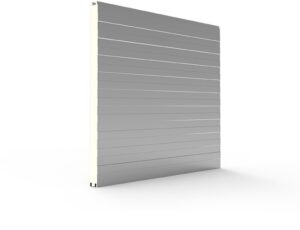
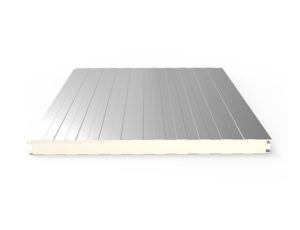
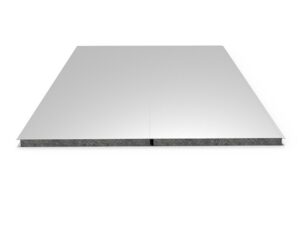
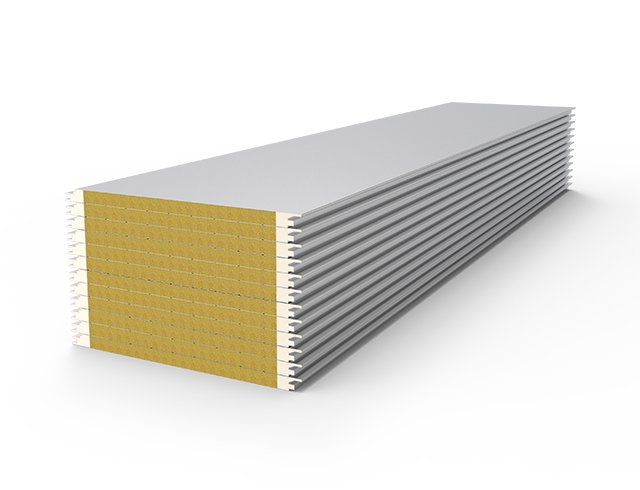
The PU Sealing Rock Mineral Wool Sandwich Panel solves the classic weakness of mineral wool construction – moisture sensitivity – by sealing the non-combustible rock wool core with polyurethane edge and face treatment. The result keeps everything that makes rock wool valuable in regulated buildings (A-grade fire behavior, high-temperature stability, acoustic damping) while adding the moisture resistance and joint tightness that foam systems are known for. Effective width 1000mm and lengths from 2m to 12m serve walls, partitions and fire-separated enclosures in food plants, industrial buildings and temperature-controlled facilities.
The panel serves rooms where fire strategy and moisture exposure coexist – a demanding combination: fire-separated chill rooms in food processing plants, partitions between wet processing areas and plant rooms, enclosures around steam-using equipment, temperature-controlled stores inside regulated buildings, and washdown zones requiring both hygiene-cleanable surfaces and non-combustible construction. Retrofit projects in operating plants value the dry installation, and insurers value the non-combustible core where cold storage and hot processes share one structure.
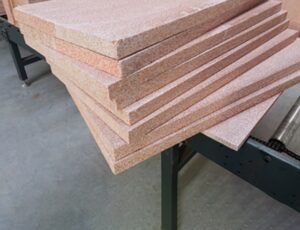
Rock mineral wool’s fiber structure is the source of both its strengths and its one vulnerability. The open fibers absorb sound and resist fire beautifully, but they also wick moisture if water or humid air reaches the core – and wet mineral wool loses insulation value until it dries. In dry fire-wall duty this never matters; in cold storage, washdown areas and humid process rooms, it is the deciding constraint. PU sealing addresses it at the geometry level: the polyurethane treatment closes the core’s exposed edges and joint faces where moisture would enter, while the steel facings and sealed joints complete the barrier. The core itself remains unaltered mineral wool, so fire behavior is unchanged. This is composite engineering at its most practical – each material doing what it does best, with the interface engineered so neither compromises the other. The outcome for operators is a non-combustible wall system that can live in wet environments without performance anxiety.
Cores are cut, sealed and bonded to facings under controlled conditions; panels are inspected for seal continuity, facing adhesion and dimensional accuracy before packing. Arteco prepares layouts with sealed joint details, coordinates panels with doors and penetrations, and supplies the fire and material documentation projects require for approvals and insurance.
The sealing quantity is minimal and located at edges and joints; the dominant core material remains rock mineral wool with its non-combustible behavior. Fire documentation is provided for the panel as delivered.
Wherever moisture exposure is realistic: cold rooms, washdown areas, humid process zones and exterior envelopes. For dry interior fire walls, standard rock wool panels remain the economical choice.
Yes. Steel facings tolerate standard sanitation programs, and the sealed core prevents wash water from entering the insulation. Stainless facings are available for aggressive washdown.
Mineral wool conducts more heat than foam, so thickness must be calculated per room temperature. We run the heat-load calculation and recommend the construction that satisfies both fire and thermal requirements.
Yes. Panels are mechanically jointed, so sections can be replaced or the wall extended with matching panels; production records support future orders.
Projects often face a practical question: is sealed mineral wool worth specifying, or will standard panels serve? The answer follows moisture exposure. Dry interior fire walls and acoustic partitions in conditioned, low-humidity spaces perform reliably with standard rock wool panels – the core never encounters the moisture that sealing protects against. Sealed construction earns its place where exposure is realistic: cold rooms with door-driven humidity, washdown zones, humid process areas and exterior envelopes. In these environments, unsealed cores can absorb moisture over time, losing insulation value and potentially harboring problems that stay hidden inside the wall. The decision is therefore straightforward once the room’s humidity regime is defined – we map each wall’s exposure during design and specify sealing exactly where the environment requires it. Right-sizing the construction this way protects performance without adding cost where no moisture threat exists.
Yes – and often should be. Each wall is specified for its own exposure, so dry partitions use standard panels while wet zones use sealed construction, keeping cost aligned with actual need.
| Specification | Value |
|---|---|
| Core Material | Rock Mineral Wool |
| Properties | Fireproof, thermal insulation, sound absorption |
| Standard Length | 2m-12m |
| Effective Width | 1000mm |