
One-Stop Cold Storage Solutions: Design, Manufacture & Support
One-Stop Cold Storage Solutions: Design, Manufacture & Support
Category: Sandwich Panels
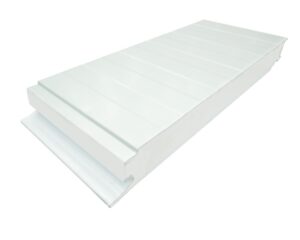
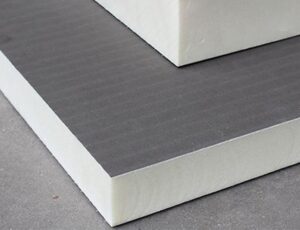
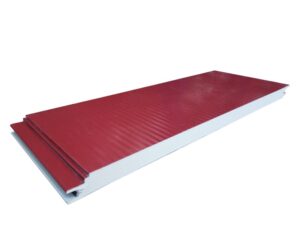
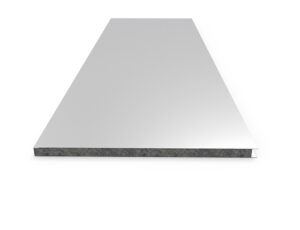
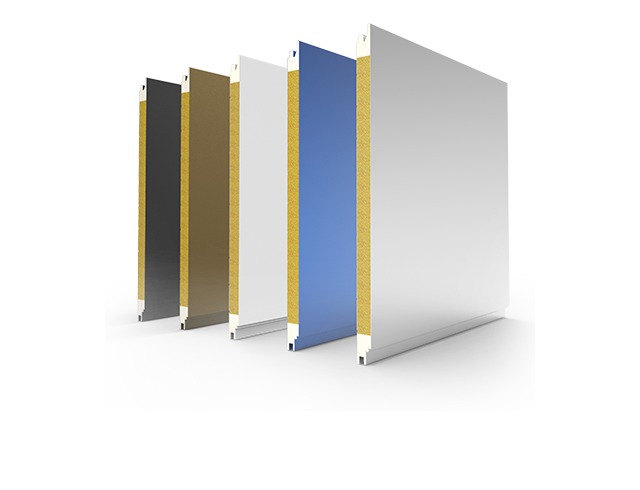
The PU + Rock Mineral Wool Wall Panel is a composite-core system that refuses the usual trade-off between insulation efficiency and fire performance. Layers of rigid polyurethane foam deliver the low conductivity that keeps rooms efficient at 0.022 W/mK class performance, while rock mineral wool layers contribute non-combustible mass, high-temperature stability and sound absorption. The combined core, bonded between steel facings, serves walls and partitions where projects need genuine thermal performance and fire-robust construction in the same element – effective width 1000mm, lengths from 2m to 12m.
The composite panel serves rooms where requirements stack: temperature-controlled spaces inside fire-regulated buildings, partitions between processing rooms and hot utility areas, walls separating chill storage from boiler or electrical rooms, acoustic and thermal barriers around compressors, and exterior envelopes of facilities where insurers scrutinize insulation combustibility. Food plants retrofitting cold rooms inside existing structures are a frequent case, because the panel delivers cold-room thermal behavior with fire characteristics the host building’s approvals can accept.
Single-material panels force a choice. Foam insulates brilliantly but remains combustible; mineral wool resists fire but conducts more heat. A composite core engineers around the choice by giving each material a defined job. The PU layers carry the thermal duty – their closed-cell structure and low conductivity do the insulating work where it counts. The rock wool layers carry the fire and acoustic duty – non-combustible mass that improves the assembly’s fire behavior and damps sound transmission. Because the layers are factory-bonded into one panel, the combination arrives as a single component: no site assembly of separate boards, no gaps between layers, no interface details left to workmanship. The engineering task is proportioning the layers for each project’s balance of thermal and fire requirements, which we do during selection. The result is an envelope element whose specification reads simply – one panel – while its performance covers ground that used to require compromise.
Composite cores are assembled and bonded to facings under controlled pressure; panels are inspected for layer alignment, facing adhesion and dimensional accuracy before packing. Arteco prepares layouts with joint details, coordinates panels with doors and penetrations, and provides the thermal and fire documentation projects need for approvals and insurance review.
Fire behavior depends on the layer proportions and tested assembly. Composite panels improve fire response versus foam-only systems; for pure fire-barrier duty, full rock wool panels remain the reference. We specify according to your project’s fire requirement.
The PU layers carry most of the thermal duty, so performance approaches foam-panel levels at comparable thickness, with the rock wool layers contributing fire and acoustic benefits. We calculate U-values per construction during selection.
In rooms where both requirements are real: cold spaces inside regulated buildings, walls adjacent to hot processes, and insured facilities with combustible-material clauses. It avoids building up separate insulation and fire layers on site.
Yes – with thickness engineered to the room temperature. Composite construction is especially useful where the cold room shares structure with fire-regulated spaces.
Thermal data and fire documentation for the panel construction ship with the order, and additional testing paperwork can be arranged for specific regulatory requirements.
Projects with stacked requirements – thermal, fire and acoustic in one wall – benefit from composite engineering applied deliberately. The design starts by ranking the requirements: which governs thickness, which governs material class, which is satisfied incidentally. Thermal duty typically sets total thickness through heat-load calculation; fire governance sets the proportion of mineral content; acoustic needs are often met by the mineral layers without additional design. From this ranking, the layer configuration is proportioned and documented, so the panel construction is engineered rather than assumed. Verification follows: U-value calculation for thermal performance, classification data for fire, and acoustic estimates where targets are specified. Owners receive a wall whose every requirement is documented as satisfied – the evidence compliance reviewers ask for. This engineering discipline is what distinguishes composite panels used purposefully from composite panels used hopefully.
Yes. Thermal calculations, fire classification data and acoustic estimates ship with the order, giving your approval and insurance reviewers the evidence for each requirement the wall serves.
| Specification | Value |
|---|---|
| Core Material | PU + Rock Mineral Wool |
| Properties | Fireproof, thermal insulation, sound absorption |
| Standard Length | 2m-12m |
| Effective Width | 1000mm |