
One-Stop Cold Storage Solutions: Design, Manufacture & Support
One-Stop Cold Storage Solutions: Design, Manufacture & Support
Category: Sandwich Panels
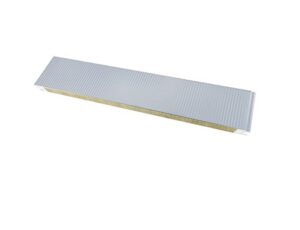
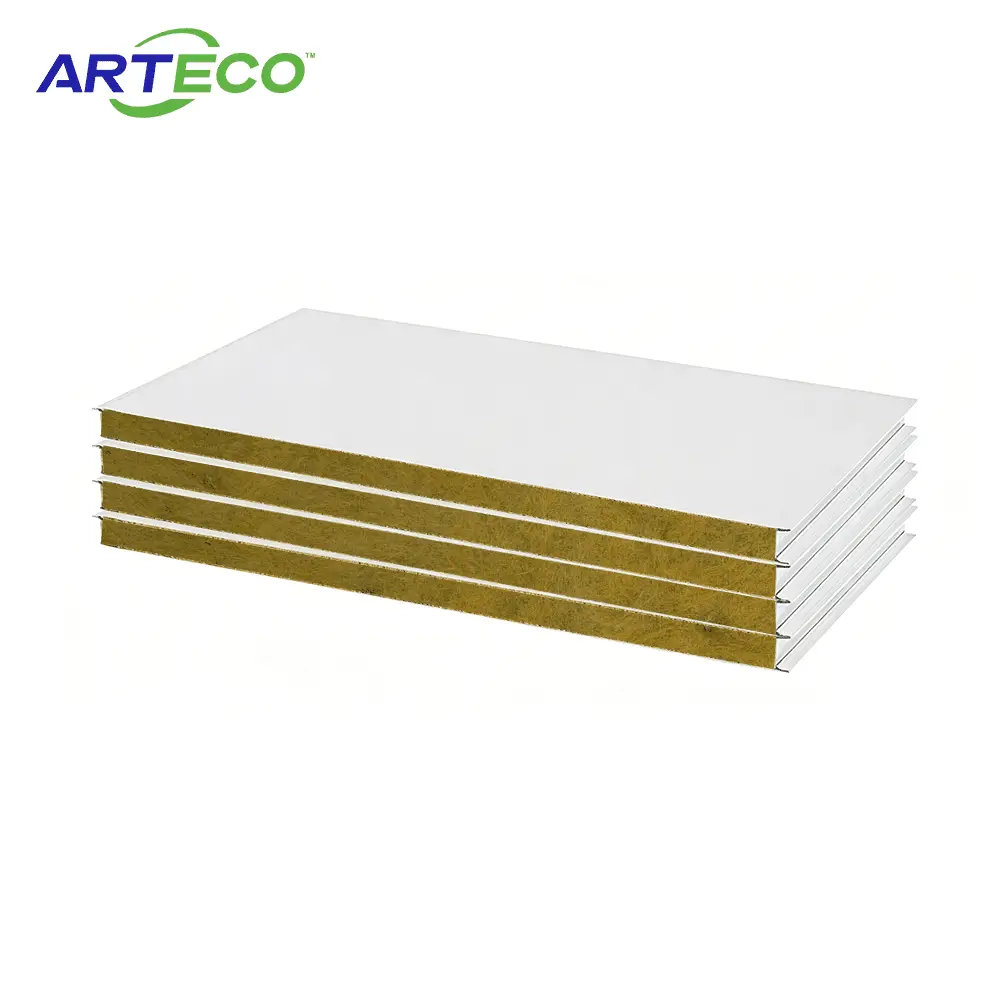
The Fireproof Rock Mineral Wool Sandwich Panel is engineered for buildings where the envelope itself must act as a fire barrier. Its rock mineral wool core carries an A1 non-combustible classification, withstands temperatures beyond 1000°C without contributing fuel, and adds at least 30 dB of acoustic insulation – all within a single factory-bonded panel with steel facings. In thicknesses from 50mm to 150mm and densities of 100–150 kg/m³, the panel serves fire walls, fire-separated partitions, equipment enclosures and exterior envelopes wherever building codes, insurers or process hazards rule out combustible insulation.
The panel is specified wherever construction must compartmentalize fire risk: fire walls between warehouse sections, partitions isolating electrical rooms and boiler plants from production floors, enclosures around ovens, fryers and other hot process equipment, exterior envelopes of insured industrial buildings, and separation walls in multi-tenant facilities. It also serves acoustic duty in compressor rooms and plant enclosures, and forms the fire-rated envelope of cold rooms built inside regulated structures. Projects where insurers apply strict combustible-material clauses to industrial construction increasingly standardize on rock wool panels for exactly this reason.
Fire classifications form a hierarchy, and the distinctions matter in a fire event. Materials rated B or C may resist ignition briefly but eventually burn, releasing heat and smoke. Materials rated A2 contain small amounts of combustible binder. A1 classification means the material is wholly non-combustible: it contributes no heat to a fire at any stage, produces no flaming droplets and maintains its physical barrier function while exposed. For a fire wall, this difference defines its purpose – an A1 wall compartmentalizes a fire so it cannot spread through the envelope itself, protecting adjacent spaces, escape routes and firefighting operations. Building authorities recognize this distinction in approval processes, and insurers recognize it in premiums. Where a project’s fire strategy requires genuine barrier performance rather than retardant behavior, A1 rock mineral wool panels are the envelope material that satisfies the requirement without qualification.
Rock wool cores are cut to density specification and bonded to pre-coated steel facings under controlled pressure; panels are inspected for facing adhesion, dimensional accuracy and edge quality before packing. Arteco prepares layouts with fire-rated junction details, coordinates panels with doors, penetrations and structural interfaces, and supplies the product documentation required for approvals and insurance submissions.
Fire-resistance duration depends on panel thickness, joint detailing and the tested assembly configuration. We supply panels matched to the fire-rating assembly specified for your project and provide the supporting documentation.
They provide thermal insulation, but mineral wool conducts more heat than foam cores, so thickness must be engineered for cold duty. They are typically used where fire requirements govern; foam panels serve pure insulation duty.
Steel facings protect the core; joints are detailed to limit moisture ingress. For washdown food environments, stainless facings and sealed joint details are available.
Yes, with approved sealing systems that restore the wall’s rating at each penetration. We detail penetration locations and sealing specifications in the layout drawings.
The core is factory-bonded at 100–150 kg/m³ density and oriented to resist gravity-driven movement, so panels maintain uniform insulation and barrier performance through their service life.
A fire wall performs as a system, and its rating depends on details beyond the panel itself. Junctions with floors, ceilings and adjoining walls must maintain barrier continuity – gaps at interfaces defeat the rating regardless of panel classification. Penetrations for pipes, cables and ducts require approved sealing systems that restore the wall’s performance at each opening. Door assemblies within fire walls carry their own ratings and must match the wall specification. Connections to structural frames need details that preserve integrity as the building moves. Each of these details is documented in our fire wall layouts, with components specified per the tested assembly – because fire ratings are awarded to complete constructions, not to panels in isolation. Projects that detail the assembly correctly pass inspections on the first submission; those that improvise details typically discover the gaps during review.
Yes. Approved sealing details and materials for each penetration type are specified in the layout and can be supplied with the panel order so the wall system installs complete.
| Specification | Value |
|---|---|
| Core Material | Rock Mineral Wool |
| Panel Thickness | 50mm / 75mm / 100mm / 150mm |
| Density | 100-150 kg/m³ |
| Fire Rating | A1 Non-Combustible |
| Acoustic Insulation | ≥30 dB |
| Steel Skin | 0.4-0.6mm Color Coated Steel |
| Width | 950mm / 1000mm |
| Temperature Resistance | Up to 1000°C |