
One-Stop Cold Storage Solutions: Design, Manufacture & Support
One-Stop Cold Storage Solutions: Design, Manufacture & Support
Category: Sandwich Panels
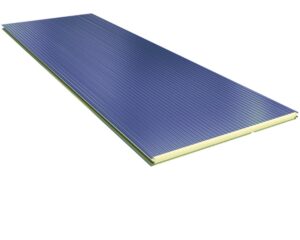
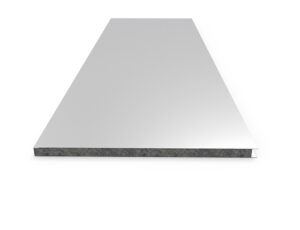
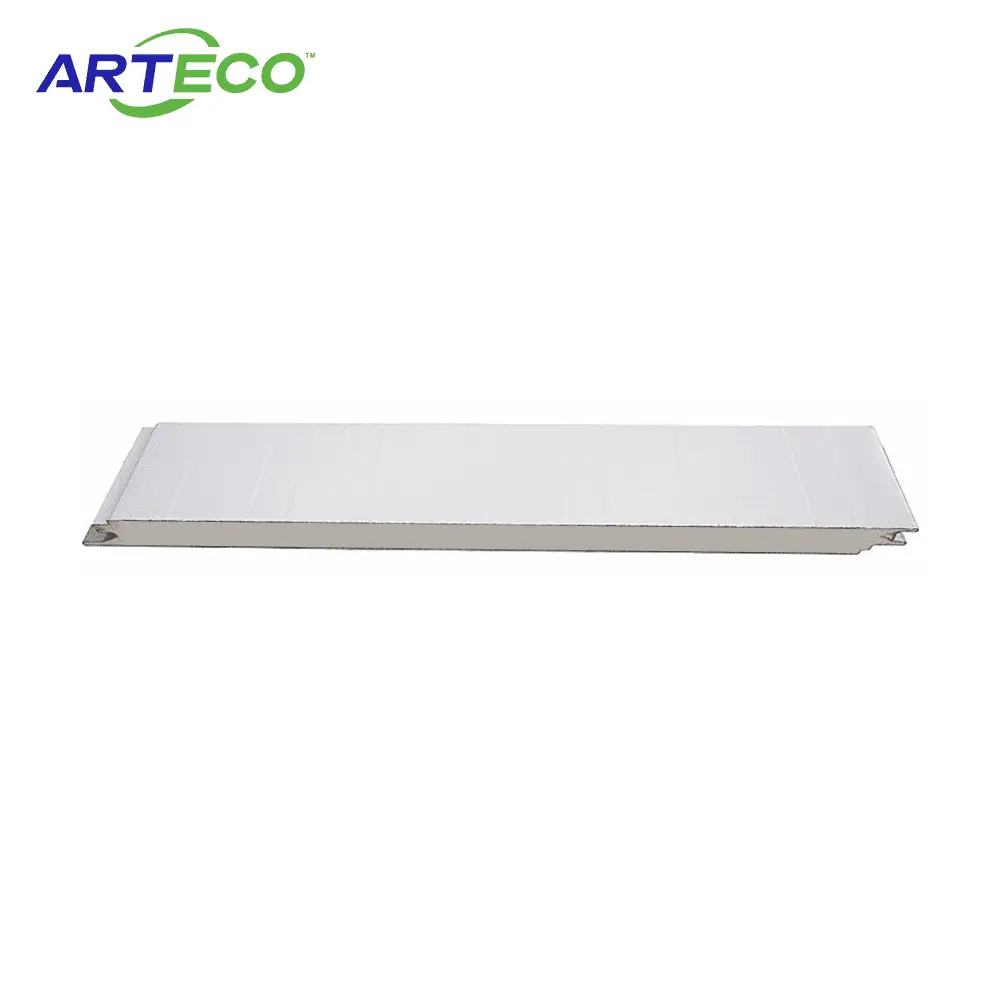
PU/PIR sandwich wall panels are the core building block of insulated construction: a rigid polyurethane or polyisocyanurate foam core continuously bonded between two pre-painted galvanized steel skins. With thermal conductivity as low as 0.022 W/(m·K), thickness options from 50mm to 200mm, and lengths up to 13.5m, these panels form walls, partitions and ceilings for cold storage facilities, food processing plants, temperature-controlled warehouses and clean industrial buildings. The result is an envelope that installs in days, insulates at a level masonry cannot match, and keeps operating energy costs low for the life of the building.
These panels serve anywhere temperature control and construction speed both matter. Standard projects include walk-in coolers and freezer rooms, multi-chamber cold storage warehouses, food and beverage processing plants, pharmaceutical storage suites, dairy facilities, supermarket preparation rooms and insulated logistics buildings. They are equally effective as internal partitions dividing temperature zones within a larger facility, and as retrofit linings that convert existing masonry buildings into cold spaces without external construction. Because the panels are self-finished on both faces, facilities can be commissioned quickly and cleaned easily, which is why operators standardize on sandwich panel construction for multi-site programs.
The insulation performance of a wall is expressed as its U-value: the lower the number, the less heat passes through. A 100mm PU panel at 0.022 W/(m·K) achieves a U-value near 0.22 W/(m²·K), while a brick wall of equivalent thickness performs around 2.0 – nearly ten times worse. In practical terms, every square meter of under-insulated wall in a -20°C freezer adds continuous refrigeration load that the compressor must remove hour after hour, year after year. Selecting thickness is therefore an energy decision as much as a construction one: chill rooms at 0°C to +5°C typically use 75–100mm, frozen storage at -18°C to -25°C uses 150mm, and deep freezers below -30°C use 200mm. Our engineers calculate the recommended thickness from your room temperature, local ambient conditions and annual operating hours, then document it in the project layout.
Panels are produced on a continuous double-belt lamination line with precision foam metering, then cured, cut and inspected for core density, facing adhesion and dimensional accuracy. Each batch carries traceable production records. Arteco supplies panels together with matching corner, joint and trim components, and provides layout drawings so installation proceeds without improvisation. Our team supports the full envelope – panels, doors and refrigeration – as one engineered package.
Both provide the same 0.022 W/(m·K) insulation value. PIR adds improved fire behavior and dimensional stability at temperature extremes, so it is typically specified for freezer rooms and projects with strict fire requirements, while PU remains the economical choice for general chill applications.
A panel room envelope typically closes in within days rather than weeks because panels arrive finished and connect through simple joint systems. This compresses the overall project schedule and reduces weather exposure risk during construction.
Yes, panels can be trimmed with standard tools, though we pre-plan most openings in the layout drawings so factory-cut edges dominate. Field-cut edges receive sealing detail guidance to keep the vapor barrier continuous.
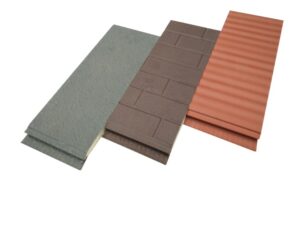
The pre-painted steel skins are smooth, non-absorbent and washable, meeting the hygiene expectations of food processing and storage rooms. Stainless steel facings are available where aggressive washdown is routine.
Minimal: periodic inspection of joints and sealants, cleaning with non-abrasive detergents, and checking door interfaces where impact occurs. Panels do not corrode, rot or settle when correctly installed.
| Specification | Value |
|---|---|
| Core Material | PU/PIR Foam |
| Panel Thickness | 50mm / 75mm / 100mm / 150mm / 200mm |
| Density | 40±2 kg/m³ |
| Thermal Conductivity | ≤0.022 W/(m·K) |
| Fire Rating | B2 / B1 (Customizable) |
| Steel Skin | 0.4-0.6mm Color Coated Steel |
| Width | 950mm / 1000mm / 1150mm |
| Length | Customizable up to 13.5m |