
One-Stop Cold Storage Solutions: Design, Manufacture & Support
One-Stop Cold Storage Solutions: Design, Manufacture & Support
Category: Sandwich Panels
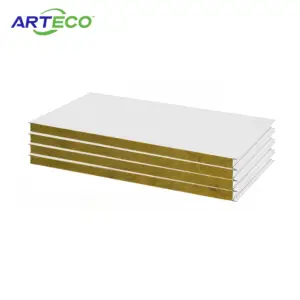
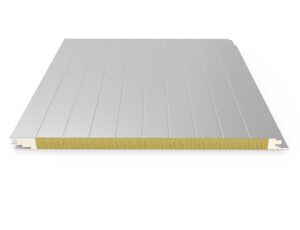
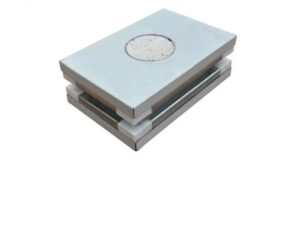
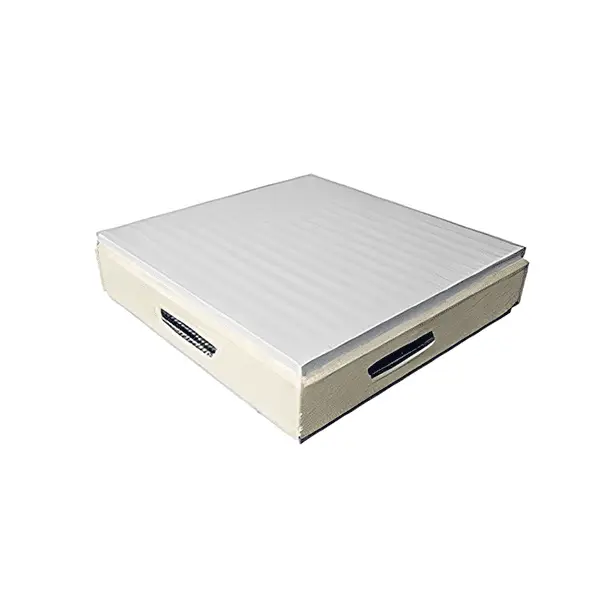
The Cam Lock Polyurethane Sandwich Panel is the joint system that turned cold room construction into true modular assembly. Embedded cam locks at panel edges pull adjacent panels together with a quarter-turn of a hex key, drawing joints tight enough to compress the sealing gasket without clamps, adhesive or skilled wet trades. Combined with a 40 kg/m³ polyurethane core at 0.022 W/mK conductivity and thicknesses from 100mm to 200mm, the panel is purpose-built for freezer rooms and deep cold stores where joint tightness determines both temperature stability and frost-free operation.
Cam lock panels are the default choice for dedicated cold rooms and freezer rooms: walk-in coolers in supermarkets and restaurants, freezer rooms in food distribution centers, blast freezer enclosures, pharmaceutical cold rooms, and modular cold storage installed inside leased warehouses where the structure may later need to be removed. Their demountable nature also serves seasonal operations – produce stores assembled before harvest and reconfigured afterward – and rental cold storage businesses that relocate rooms between sites. Wherever the cold room is treated as equipment rather than permanent construction, cam lock joints provide the lifecycle flexibility.
In a freezer room, every millimeter of joint gap works against the refrigeration system twice. First, it leaks warm humid air into the room, adding latent load the compressor must remove as ice on the evaporator. Second, that ice forces more frequent defrost cycles, which warm the room and degrade product temperature stability. Cam lock joints attack the problem at its source: the quarter-turn action pulls panel faces into full contact along the entire joint, compressing the integrated gasket into a continuous seal. Unlike sealant joints, the seal is mechanical and repeatable – it does not shrink, crack or creep with thermal cycling. The result operators notice most is less frost at panel edges and door frames, longer intervals between defrosts, and rooms that hold temperature through door openings. For rooms below -25°C, where joint leakage penalties are largest, cam lock construction is the engineering standard.
Panels are laminated with locks foamed into position so hardware alignment is factory-verified before shipment. Each lock cycle is tested for full engagement, and panels are inspected for facing finish and dimensional accuracy. Arteco supplies complete room packages – panels, cam lock hardware, doors and refrigeration – with layout drawings showing panel positions and lock locations, so installation proceeds room by room without improvisation.
Typical rooms assemble in days: once floor panels are leveled, wall and ceiling panels lock together panel by panel. A 100 m³ freezer room is commonly erected by a small crew within a few working days.
Yes – that is a core advantage of cam lock construction. Panels unlock, stack for transport and re-assemble at the new location with replacement gaskets where needed. Many operators plan multiple relocations over a room’s life.
Yes. The mechanical joint maintains compression regardless of temperature, and lock hardware is rated for deep-freeze service. Joint design details account for thermal contraction of the panel skins.
Periodic inspection for seal condition at high-traffic edges, and keeping lock access areas clear. If a gasket wears, individual joint sections can be resealed without dismantling the room.
Yes. Locks release in reverse order, so a damaged panel can be swapped without disturbing the rest of the room. We keep project panel schedules on record for matched replacements.
Cam lock room projects follow a disciplined sequence that keeps installation fast and results predictable. The process begins with the room schedule – dimensions, temperatures and duty for each space – which drives thickness selection and panel counts. Floor preparation comes next: level, insulated floor construction must be ready before walls begin, because cam lock walls lock onto the floor panel system. Panels then arrive labeled by position, and erection proceeds wall by wall with a single hex key, each joint drawing tight as the lock turns. Door frames install as walls close around them, and refrigeration connects to pre-planned penetrations. The result is a room that reaches temperature quickly because its envelope was tight from the first locked joint. We supply the complete sequence with layout drawings, hardware kits and support at each phase.
A level, load-rated base with insulated floor panels matching the room specification. We detail the floor system and its interface with wall panels so the envelope closes continuous from floor up.
| Specification | Value |
|---|---|
| Joint Type | Cam Lock System |
| Core Material | Polyurethane Foam |
| Panel Thickness | 100mm / 120mm / 150mm / 175mm / 200mm |
| Density | 40±2 kg/m³ |
| Thermal Conductivity | ≤0.022 W/(m·K) |
| Steel Skin | 0.5mm Pre-painted Galvanized Steel |
| Width | 1000mm / 1150mm |
| Installation | Tool-free Cam Lock Assembly |