
One-Stop Cold Storage Solutions: Design, Manufacture & Support
One-Stop Cold Storage Solutions: Design, Manufacture & Support
Category: Sandwich Panels
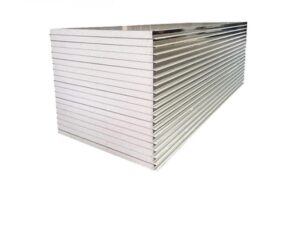
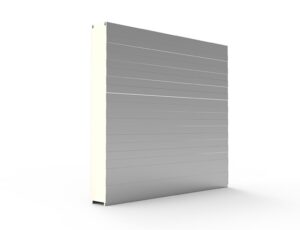
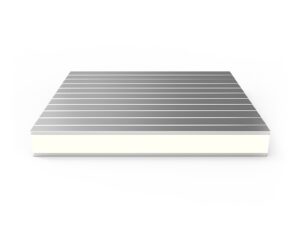
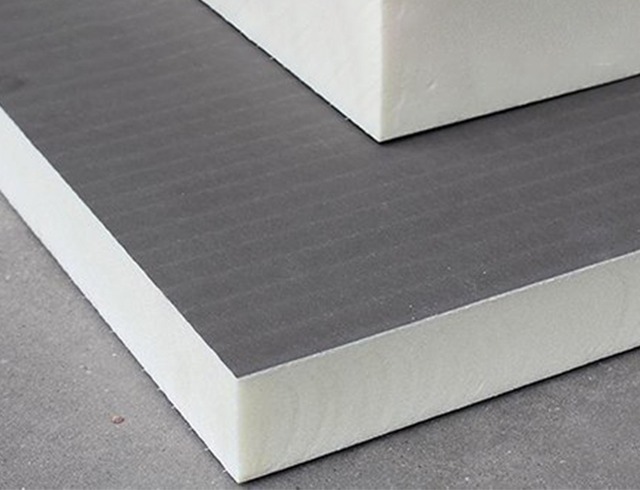
The PUR/PIR Foam Polyurethane Rigid Pre-insulated Board is insulation in its pure industrial form: rigid polyurethane or polyisocyanurate foam boards conducting heat at just 0.022 W/mK, supplied as pre-insulated elements for industrial insulation applications. Unlike finished sandwich panels, these boards serve projects that build their own assemblies – insulated pipe supports, cold equipment linings, built-up insulated structures, OEM fabrications and field-applied insulation systems – delivering the foam’s exceptional thermal performance in a format engineers can cut, shape and integrate.
The boards serve industrial insulation wherever assemblies are built rather than bought: pipe support blocks and insulation saddles for refrigerated piping, plinths and bases under cold equipment, lining insulation inside fabricated enclosures, OEM products incorporating rigid insulation elements, cold room floor insulation sections, and field insulation systems constructed around existing plant. Fabricators value the boards because foam properties arrive ready to integrate – density, conductivity and strength are material properties, not installation outcomes.
Finished insulation products solve standard problems; industrial projects routinely present non-standard ones. A refrigerated pipe needs supports that insulate as well as carry load – foam blocks cut to saddle geometry solve this because the rigid foam bears weight while blocking the thermal bridge a steel support would create. A fabricated enclosure needs insulation bonded into its walls during manufacturing, not applied afterward – pre-insulated boards become part of the fabrication itself. An OEM product needs insulation with certified properties its documentation can reference – foam boards deliver conductivity and density as material data. In each case the principle is the same: rigid foam contributes its properties directly to the engineered assembly, and the assembly’s designer controls how. That is why material quality matters more in board form than in finished products – there is no panel system to compensate for weak foam. Our boards hold density and conductivity at specification because industrial integrations depend on those numbers being true: a pipe support sized for 40 kg/m³ foam fails if the material delivers less. For engineers and fabricators, verified material properties are the product.
Boards are produced with controlled foam metering and curing, then cut to specification with density and conductivity verified per batch. Arteco supplies boards to project dimensions with material documentation, and supports integrators with technical data for engineering calculations – conductivity, density, compressive strength and fire classification – so foam properties flow directly into design records.
Boards are cut to project specifications from standard production blocks; share your dimension requirements and quantities for a tailored quotation.
Yes – batch test data for density, thermal conductivity and fire classification accompanies supply for engineering documentation and OEM records.
Rigid PUR/PIR foam serves low-temperature insulation duty including refrigerated pipe and equipment applications; PIR variants add fire-resistant behavior where required.
Rigid foam carries compressive loads appropriate to its density class, making it suitable for pipe supports, plinths and load-bearing insulation details. We provide compressive strength data for structural calculations.
Yes – the foam cuts, shapes and bonds cleanly with standard fabrication methods, which is why integrators choose board form for custom assemblies.
Industrial integrations succeed when material data flows cleanly from supplier to designer, and rigid foam board projects are no exception. The data chain should begin at quotation stage: conductivity values for thermal calculations, density for weight and buoyancy considerations, compressive strength for structural details, and fire classification for compliance documentation. Designers work these numbers into their engineering records, and the assembly that results is only as reliable as the data behind it – which is why verification matters as much as the numbers themselves. Batch testing provides that verification: each production batch carries measured properties, and documentation linking batches to test records lets integrators trace any finished assembly back to verified material. Problems in industrial insulation rarely originate in the foam chemistry; they originate in assumptions about it. Supplying verified, documented properties removes the assumption layer entirely, which is why serious integrators treat material documentation as a selection criterion rather than an afterthought.
Thermal conductivity, density, compressive strength and fire classification data, with batch test documentation available for projects requiring verified traceability in their records.
| Specification | Value |
|---|---|
| Core Material | PUR/PIR foam |
| Thermal Conductivity | 0.022 W/mK |
| Application | Industrial insulation |
| Fire Resistance | Non-flammable |