
One-Stop Cold Storage Solutions: Design, Manufacture & Support
One-Stop Cold Storage Solutions: Design, Manufacture & Support
Category: Sandwich Panels
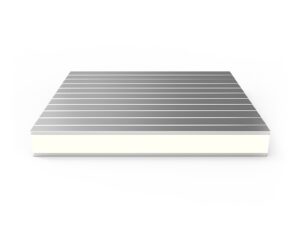
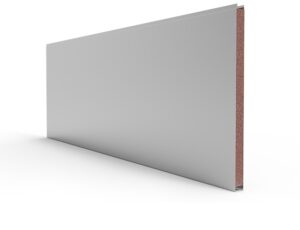
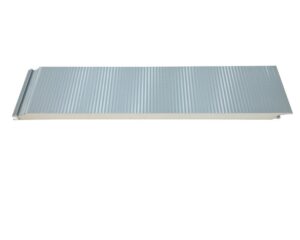
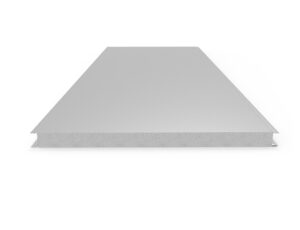
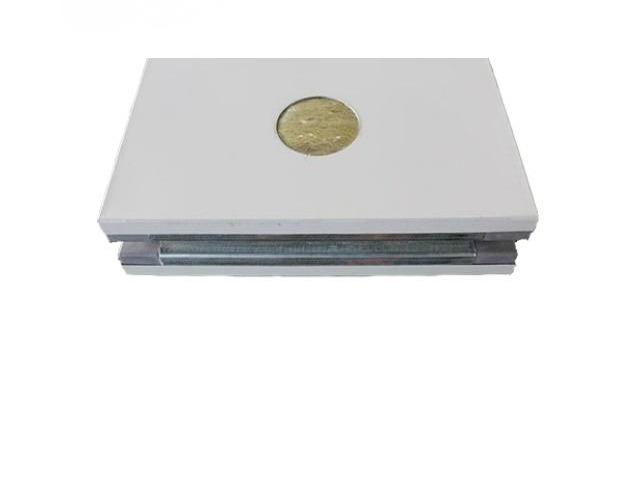
The Handmade Rock Wool Cleanroom Panel combines two capabilities custom cleanroom projects need most: A-grade non-combustible construction and hand fabrication for non-standard geometry. Rock wool cores provide fire barrier performance that foam cannot match, while skilled fabrication produces panels in the special sizes, angles and junction formats that machine lines cannot serve – all finished to cleanroom surface standards. The panel serves fire-regulated cleanrooms whose architecture refuses to be standard.
The panel appears wherever fire governance and custom geometry coincide: pharmaceutical suites renovated within listed or constrained buildings, hospital clean areas threading around structural and service obstructions, laboratory facilities with unique room shapes, electronics rooms with fire walls following irregular process layouts, and the custom fire-rated components within larger cleanroom projects – junction pieces, column enclosures, and barrier sections shaped by existing construction.
Fire-regulated cleanrooms present a compounded problem. Standard fire-safe panels are machine products – economical and consistent, but dimensionally bounded. Custom geometry is typically a handcraft exercise – flexible, but usually built from combustible boards and site improvisation. Projects needing both have historically compromised: accepting combustible custom work in otherwise non-combustible rooms, or forcing standard panels into geometry they do not fit. Handmade rock wool panels dissolve the compromise. Each custom piece is fabricated around a rock wool core – cutting, fitting and finishing the mineral material by hand to the required shape – so the finished room maintains A-grade continuity even where no two panels repeat. The fabrication discipline matters as much as the material: in cleanroom service, custom pieces must meet the same flatness, joint and surface standards as standard panels, and our shop drawings, fabrication sequence and inspection hold handmade components to exactly that bar. The outcome is cleanroom envelopes that satisfy fire authorities at every position, standard or not.
Custom panels are fabricated against position shop drawings with core, facing and edge details specified per piece; completed panels are inspected for flatness, surface quality and dimensional accuracy before packing. Arteco surveys geometry where required, prepares the custom component schedule, and coordinates handmade fire-rated pieces with standard panels and cleanroom hardware for one consistent installation.
Yes – every handmade piece uses the same rock wool core system, so fire performance is continuous across standard and custom positions. Joint details maintain compartmentation at interfaces.
Non-standard sizes, angled panels, tapered pieces, column enclosures and special junction formats. Share drawings or site measurements and we will produce shop drawings for each position.
Facing finishing follows the same surface criteria as machine-made panels – flat, cleanable, flush-jointed – with inspection before shipment ensuring consistency.
Schedules follow drawing approval and fabrication complexity; we confirm per component list so custom work aligns with the installation program.
Yes – projects commonly use machine-made panels for standard walls and handmade pieces for custom positions. Joint systems are identical, so the room reads as one construction.
Custom geometry creates the junctions where fire continuity is most easily lost – and fire-regulated facilities cannot afford those gaps. The discipline starts in design: every custom piece is drawn with its interfaces identified, so each junction between handmade components, standard panels and host building elements has a defined fire-stopping detail. Penetrations through custom sections receive the same treatment as standard walls – sleeved, sealed and documented per the wall’s classification requirement. During fabrication, custom pieces carry the same core system as standard panels, so material continuity is inherent rather than assembled from mixed sources. Installation then follows the drawing set, with joint treatment specified for each interface type. The result is an envelope whose fire performance is continuous at every position – standard or custom – and whose documentation demonstrates exactly that continuity. Facilities built this way present fire authorities with complete evidence; facilities that improvise custom junctions present them with questions.
Each interface type is drawn with its fire-stopping detail and referenced in the installation record, so the completed envelope’s fire continuity can be verified position by position.
| Specification | Value |
|---|---|
| Core Material | Rock wool |
| Production Method | Handmade |
| Fire Resistance | A-grade |
| Application | Custom cleanroom projects |