
One-Stop Cold Storage Solutions: Design, Manufacture & Support
One-Stop Cold Storage Solutions: Design, Manufacture & Support
Category: Sandwich Panels
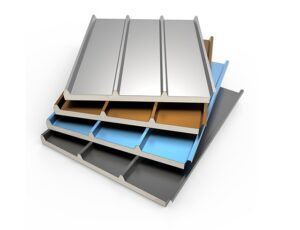
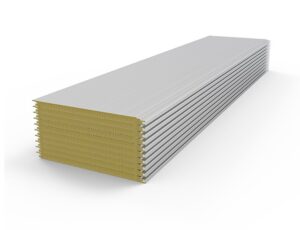
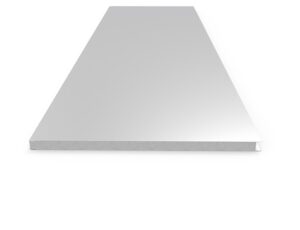
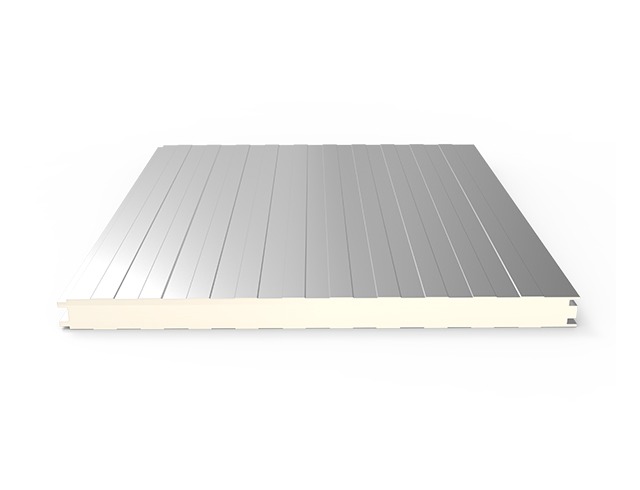
The 75mm Cold Room Panel is the balanced standard for medium-duty refrigerated storage: thick enough to hold chilled and lightly frozen temperatures with comfortable margin, slim enough to preserve storage volume and keep construction economical. Its polyurethane core at 0.022 W/mK conductivity handles rooms from +5°C down to about -15°C, which covers the widest band of real-world cold storage duty – fresh food distribution, dairy storage, meat chill rooms, produce stores and multi-purpose rooms that switch between products through the year.
The 75mm panel serves facilities whose duty spans more than one temperature class: meat chill rooms holding carcasses and cuts at -2°C to +2°C, dairy stores at +2°C to +5°C, produce warehouses running campaigns at varying setpoints, distribution hubs with mixed fresh and lightly frozen lines, supermarket back-of-house rooms, and catering production suites. It is also the frequent choice for multi-purpose cold rooms whose product mix changes seasonally, because the thickness performs credibly across the chill-to-light-freeze band without overbuilding the envelope.
Panel selection is a question of temperature differential and duty cycle. A room at -10°C in a 30°C ambient faces a 40-degree differential – more than a chiller, less than a deep freezer. At this duty, 50mm panels run thin on margin: heat gain rises, and any increase in door traffic or ambient heatwave pushes the refrigeration system toward its limit. A 150mm panel would hold easily but consumes floor area and budget that the duty does not require. The 75mm panel carries the load with headroom – compressors run with reserve, room temperature recovers quickly after doors open, and the envelope leaves room for the duty to drift colder in future without rebuilding. Our heat-load calculations confirm this margin project by project, which is why 75mm so often emerges as the specification for rooms that must simply work reliably across a working life of mixed service.
Continuous lamination controls core density at 40 kg/m³ and facing bond across the 75mm profile; panels are cut to length, inspected and packed by position with labels matching the layout drawings. Arteco coordinates panels with doors, junction details and refrigeration equipment, and provides the heat-load calculation that validates thickness for each room’s actual duty.
It can hold mild frozen temperatures, but -18°C continuous duty is better served by 150mm panels, which keep heat gain and frost risk lower. If your room may move to full freezer duty later, plan the thickness now or design for re-lining.
Meat chill duty around -2°C to +2°C sits squarely in the panel’s sweet spot: enough insulation to stabilize temperatures through frequent door openings and carcass loading, without the space loss of freezer-grade walls.
Heat gain through the envelope drops roughly in proportion to thickness, so 75mm walls admit about a third less heat than 50mm walls. In rooms with long operating hours or high ambient temperatures, the energy saving is meaningful across the year.
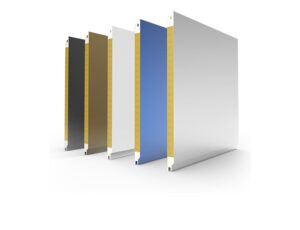
Yes, for washdown-intensive environments such as meat and dairy processing. Color-coated and galvanized facings cover standard storage rooms.
Yes – chill rooms at 75mm and freezer rooms at 150mm use the same joint family and facing options, so a mixed facility is one coherent envelope system.
Facilities that switch room duty across seasons – produce campaigns, mixed distribution, rotational product storage – get the most from 75mm construction when operating discipline matches the design. Setpoints should change with product requirements, and the control system should be configured for the full range the room will serve rather than a single temperature. Door discipline matters more in multi-purpose service: different products arrive at different rhythms, and recovery time between openings should be understood for each duty. Evaporator defrost scheduling can be tuned as duty changes, since humidity loads vary with product type. We support multi-purpose rooms by documenting the operating envelope during design – the temperature band, recovery behavior and defrost strategy for each duty – so operators run the room intentionally rather than discovering its limits in service.
Yes – 75mm panels serve the full band when refrigeration is sized for the coldest duty. We size the system against your duty cycle and document operating guidance for each mode.
| Specification | Value |
|---|---|
| Panel Thickness | 75mm |
| Standard Facings | Steel sheet / Galvanized sheet / Stainless steel |
| Core Material | PU (Polyurethane) |
| Thermal Conductivity | 0.022 W/mK |
| Standard Length | 2m-12m |
| Effective Width | 1000mm |