
One-Stop Cold Storage Solutions: Design, Manufacture & Support
One-Stop Cold Storage Solutions: Design, Manufacture & Support
Category: Sandwich Panels
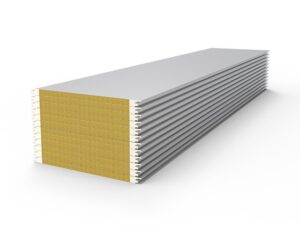
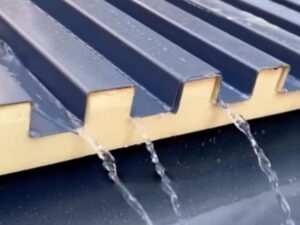
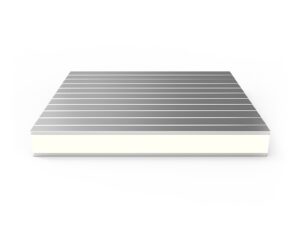
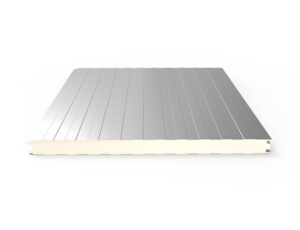
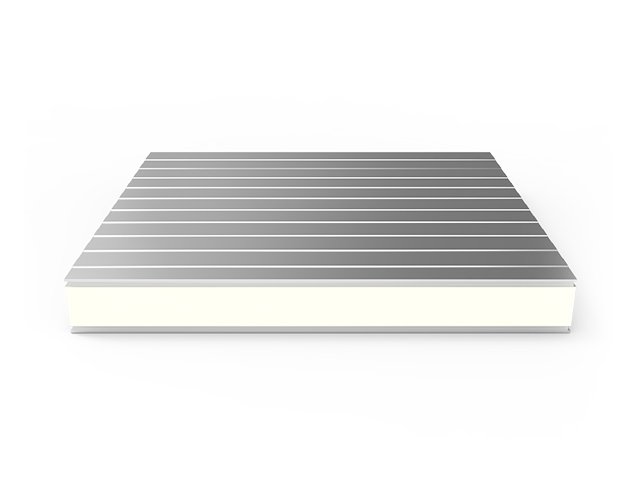
The 200mm PU/PIR cold room panel is our heaviest-duty insulated envelope for deep-freeze and ultra-low-temperature rooms. A 40 kg/m³ rigid polyurethane or polyisocyanurate foam core is bonded between pre-coated steel, galvanized or stainless steel facings to form a panel that holds -35°C to -45°C storage temperatures with minimal heat ingress. At 200mm thickness the panel delivers the lowest U-value in our cold room range, which directly reduces compressor run-time and energy cost in blast freezers, low-temperature holding stores and freezer rooms operating in hot climates.
This panel thickness is specified wherever the temperature difference between the room and its surroundings is extreme. Typical projects include blast freezers and holding freezers at -35°C to -45°C, low-temperature logistics warehouses, ice cream production plants, seafood processing facilities and meat storage rooms in regions with high ambient temperatures. It is also the preferred choice when freezer rooms are built inside existing warm buildings, because the added thickness controls condensation risk on the outer skin. For rooms with heavy forklift traffic, the 200mm panel’s rigidity supports impact protection details such as stainless steel skirting and door frame reinforcement.
Heat flow through an insulated wall is proportional to the temperature difference and inversely proportional to insulation thickness. Moving from 150mm to 200mm at 0.022 W/mK reduces heat gain per square meter by roughly 25 percent. In a 500 m³ freezer room at -40°C in a 30°C ambient, that reduction can save several kilowatts of continuous refrigeration load – capacity that otherwise requires larger compressors, more condensers and higher electricity bills. Thicker panels also keep the external face closer to ambient temperature, which lowers the risk of surface condensation and panel skin corrosion over years of operation. Our engineers calculate the recommended thickness for every project from room temperature, ambient design conditions and operating schedule.
Panels are produced on a continuous lamination line with automated foam metering, then cured, cut and inspected before packing. Each batch is checked for core density, facing adhesion and dimensional tolerance. Arteco coordinates panel schedules with door, floor and refrigeration packages so the room envelope and equipment arrive as one compatible system. Our team provides layout drawings, joint detail guidance and installation support throughout the build.
Choose 200mm for rooms colder than about -30°C, for freezers in hot or humid climates, or whenever energy cost is a priority. For rooms at -18°C to -25°C, 150mm is usually sufficient. We can run the heat-load comparison for your specific design conditions.
Both foams offer the same insulation value, but PIR has a more stable cell structure at temperature extremes and better fire behavior – it is self-extinguishing with a softening point above 250°C. PIR is typically specified for freezer rooms and projects with strict fire or insurance requirements.
Yes. Stainless facings are available for high-hygiene environments such as seafood and meat processing, where washdown with cleaning chemicals is routine. Grade and surface finish are confirmed during order review.
Panels connect through tongue-and-groove or cam-lock joints depending on the system selected, with dedicated corner, floor and ceiling pieces to keep the envelope continuous. We supply all junction components and detail drawings with the panel package.
Deep-freeze rooms concentrate more energy and more product value per cubic meter than any other cold storage application, which raises the cost of envelope shortcomings accordingly. Every watt of heat leaking through walls must be pumped out at deep temperatures, where refrigeration efficiency is lowest – so insulation defects multiply into disproportionate energy bills. Moisture infiltration is equally punishing: at -35°C and below, ingress air deposits frost rapidly, forcing defrost cycles that warm the room and stress product temperature stability. The 200mm panel addresses both failure modes at the source: maximum thickness in the family minimizes heat flow, while tongue-and-groove joints keep the vapor path sealed when detailed per our drawings. Owners of deep-freeze facilities should treat envelope specification as the first equipment decision – before compressors, before evaporators – because the envelope sets the load that all other equipment must serve for the life of the room. Getting it right at 200mm is the cheapest energy investment a freezer will ever make.
Junction and door components are matched to panel thickness, so the envelope stays continuous at full build-up. We detail every interface for 200mm construction in the room layout.
| Specification | Value |
|---|---|
| Panel Thickness | 50mm, 75mm, 100mm, 150mm, 200mm |
| Standard Facings | Steel sheet / Galvanized sheet / Stainless steel |
| Core Material Density | 40 kg/m³ ±2 kg/m³ |
| Thermal Conductivity | 0.022 W/mK |
| Acoustic Insulation | 30 dB |
| Standard Length | 2m-12m |
| Effective Width | 500-1150mm |
| Fire Resistance | Non-flammable, self-extinguishing |
| Softening Point | >250°C |