
One-Stop Cold Storage Solutions: Design, Manufacture & Support
One-Stop Cold Storage Solutions: Design, Manufacture & Support
Category: Sandwich Panels
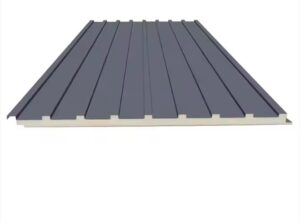
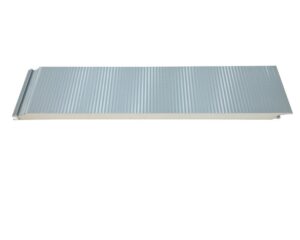
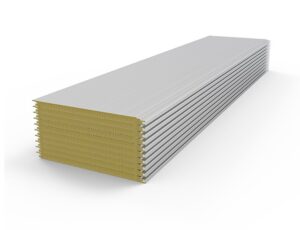
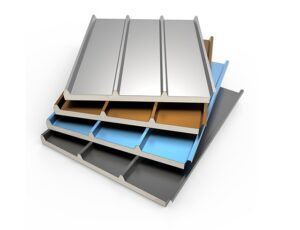
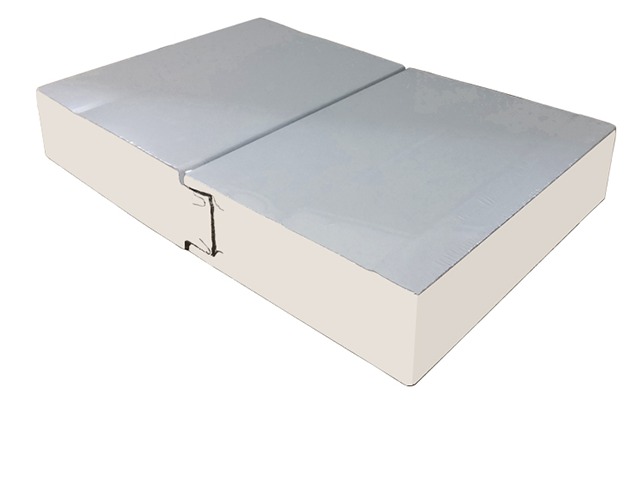
Cold Room Panel in Australia is our export-configured insulated panel system for Australian cold storage projects – produced to the same 0.022 W/mK polyurethane core standard as our domestic supply, then engineered, packed and documented for the realities of Australian construction: long inland transport legs, high solar loads, strict building compliance and installation teams that need panels arriving complete and clearly labeled. Thicknesses from 40mm to 200mm cover chill rooms, freezers and temperature-controlled processing spaces across every Australian climate zone.
The panels serve the breadth of Australian cold chain demand: export meat and seafood processing plants, dairy cool rooms and cheese maturation suites, horticulture packhouses and produce stores in growing regions, supermarket distribution centers in metropolitan corridors, pharmaceutical storage suites, and hospitality cold rooms in hotels and venues. They fit both new builds and retrofit rooms inside existing industrial sheds – a common Australian scenario where temperature control is added to leased warehouse stock without new structure.
Export cold storage supply succeeds or fails on details that domestic projects never face. Transport: panels must arrive undamaged after ocean freight plus potentially thousands of kilometers of road haulage, so packing is engineered as carefully as the panels themselves, with load plans that prevent edge crushing and moisture exposure. Climate: Australian design ambients and solar loads push envelope heat gain above many northern-hemisphere assumptions, so thickness selections are calculated against local conditions rather than imported defaults. Compliance: documentation must support Australian building and food safety requirements, so test data and material information ship in usable form. Program: installation teams schedule around vessel arrival dates, so production and shipping schedules are coordinated with the construction program weeks ahead. Treating distance as an engineering input – not just a freight cost – is what allows international panel supply to perform like local supply. Our Australian project record reflects exactly this discipline, from first layout drawing to post-installation support.
Panels are produced on our continuous lamination line with batch-traceable core testing, then cut to project layouts and packed for export with position labeling. Arteco prepares heat-load calculations against Australian climate data, layout drawings, junction details and full shipping documentation, and provides installation support remotely throughout the build, including coordination with local refrigeration contractors.
Ocean freight typically runs several weeks depending on destination port, plus production lead time. We confirm the full schedule at order and coordinate with your construction program.
Facing and fixing specifications can be adapted for coastal corrosion classes, and layouts account for local wind requirements. Share your site conditions during design so the specification matches.
Yes. We provide layout drawings, junction details and remote technical support for local installation teams, and can review installation queries in real time across time zones.
Core thermal test data, material specifications and panel documentation ship with each order; additional certification paperwork can be prepared for specific project requirements.
Yes. Project records retain the configuration used, so extensions or repairs ship matching panels on standard production schedules.
Australian cold storage projects follow local practice on several fronts, and international supply integrates smoothly when these are planned early. Building approvals reference Australian standards and local certification pathways; panel documentation is prepared to support these processes. Food safety requirements follow state food authority regulations, and panel surface specifications align with the hygiene expectations of Australian food businesses. Electrical work on site is performed by licensed trades, so refrigeration packages are supplied with connection points suited to local practice. Transport logistics consider Australian distances – from port to regional sites, road freight legs can exceed ocean transit time, so packing protects panels accordingly. Our Australian project experience covers each of these fronts, and we coordinate with local installers, refrigeration contractors and certifiers so international panel supply performs like a domestic order from first drawing to handover.
Yes. We provide layouts, details and remote technical support to your local teams, and coordinate interfaces so panels, doors and refrigeration install as one system.
| Specification | Value |
|---|---|
| Panel Thickness | 40mm, 50mm, 75mm, 100mm, 150mm, 200mm |
| Standard Facings | Steel sheet / Galvanized sheet / Stainless steel |
| Core Material Density | 40 kg/m³ |
| Thermal Conductivity | 0.022 W/mK |
| Acoustic Insulation | 30 dB |
| Standard Length | 2m-12m |
| Effective Width | 1000mm |
| Fire Resistance | Non-flammable |