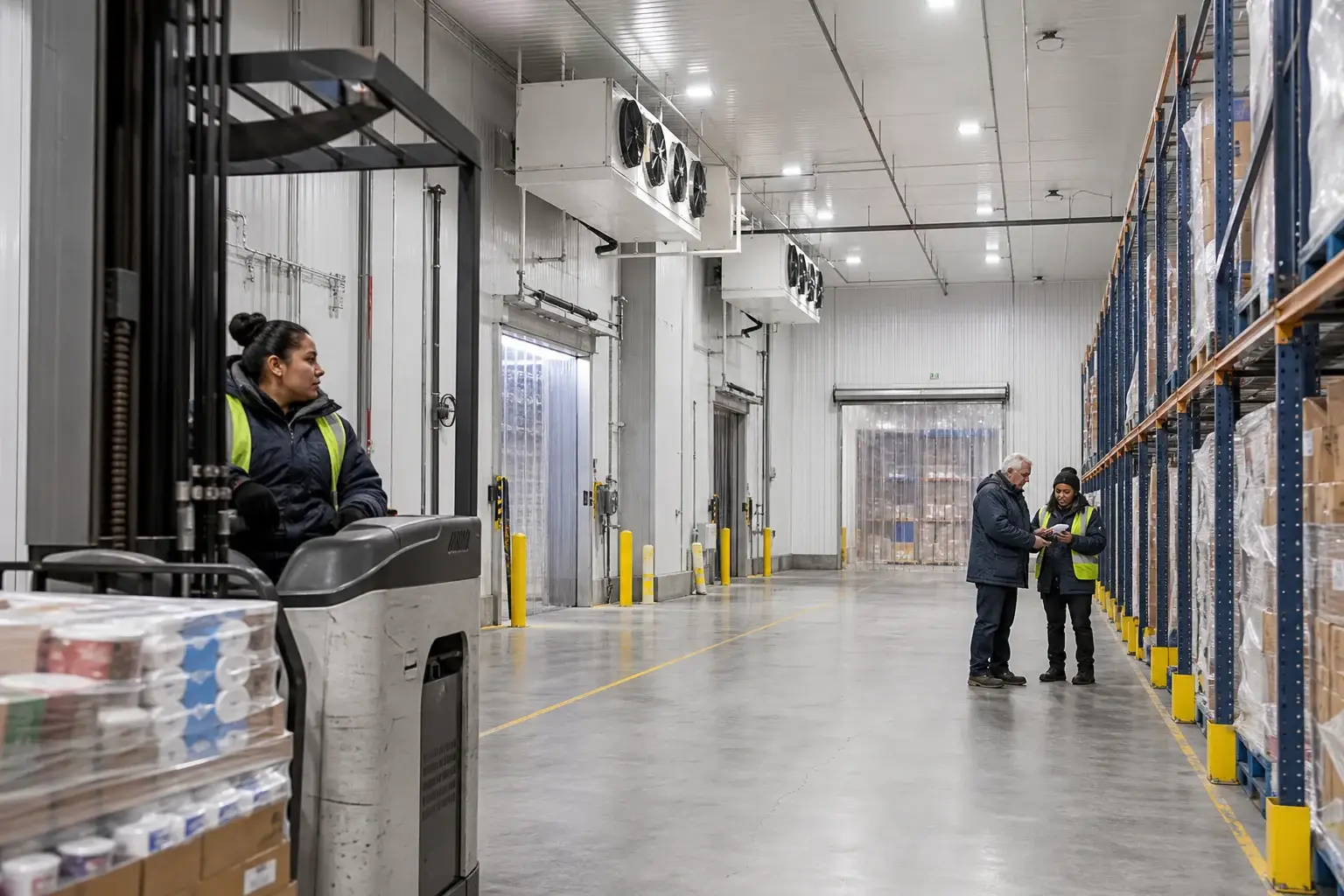
1. Main Materials for Building a Walk In Cooler
To build a well-insulated, airtight, and durable walk-in cooler, the following core materials are required:
- Insulation Panels Polyurethane (PU) insulated sandwich panels are the main body of the cooler. They feature low thermal conductivity, high density, and excellent heat insulation performance. Standard thickness options include 50mm, 75mm, 100mm, and 150mm to adapt to different temperature ranges.
- Refrigeration Unit Includes scroll or screw condensing units, evaporators, expansion valves, and connecting copper pipes. The refrigeration system determines the cooling speed, temperature stability, and overall energy consumption of the walk-in cooler.
- Cooler Door & Sealing Accessories Heavy-duty insulated swing doors or sliding doors are equipped with high-elastic rubber sealing strips to prevent cold air leakage. Door heaters are optional to avoid frost and freezing on door frames.
- Electrical Control System Intelligent temperature controller, electric box, wiring harness, lights, and emergency switch. The control system supports automatic temperature adjustment, defrosting, and fault alarm functions.
- Auxiliary Installation Materials Waterproof layers, aluminum alloy edge strips, fixing brackets, sealant, and vibration-proof pads. These materials ensure the overall tightness, stability, and neat appearance of the cold room.
2. Important Installation Precautions
The installation quality directly affects the cooling effect and service life of the walk-in cooler. The following rules must be followed during construction:
- Choose a flat, dry, and well-ventilated installation site. The ground must be solid and level to prevent panel deformation and unit vibration.
- Ensure all insulation panels are tightly spliced with sealant fully filled in gaps to avoid cold air leakage and condensation.
- Install the condensing unit in a well-ventilated outdoor or open area, avoiding enclosed spaces that cause poor heat dissipation and high pressure failure.
- Copper pipe welding and wiring must comply with standard refrigeration construction specifications to prevent refrigerant leakage and circuit failure.
- Keep the evaporator evenly installed inside the room to ensure uniform temperature circulation and avoid local temperature differences.
- Complete waterproof and drainage work to prevent water accumulation inside the cold room and protect electrical components from moisture damage.
3. Daily Usage and Maintenance Precautions
Correct daily operation and regular maintenance can greatly reduce failure rates and save energy costs.
- Temperature Management Set the temperature reasonably according to stored goods. Do not frequently adjust the temperature setting to avoid unstable operation of the refrigeration system.
- Reduce Frequent Door Opening Minimize door opening time and frequency to prevent a large amount of cold air loss, which may increase power consumption and cause frosting on the evaporator.
- Standard Goods Placement Keep a gap between goods and evaporator, walls, and floor to ensure smooth cold air circulation. Do not stack goods too densely or block ventilation openings.
- Regular Defrosting Timely manual or automatic defrosting prevents thick frost from affecting heat exchange efficiency and cooling capacity.
- Daily Cleaning Regularly clean the condenser surface, evaporator fins, and internal floor to keep the equipment clean and extend service life.
- Safety Inspection Regularly check circuit stability, sealing strip tightness, pipeline pressure, and unit noise. Stop operation immediately once abnormal conditions appear.
- Long-term Shutdown Maintenance If the cooler is not used for a long time, drain all water, clean the interior thoroughly, and cut off the power supply to prevent dampness and component aging.
4. Conclusion
A qualified walk-in cooler depends on high-quality construction materials, standardized installation, and scientific daily management. With correct installation and proper maintenance, the cold room can maintain stable cooling performance, reduce energy consumption, and provide long-term reliable cold storage solutions for commercial and industrial refrigeration scenarios.